Is Jigokudani Snow Monkey Park Worth Visiting in Nagano, Japan?
In the current state of the internet, you may see a viral video of monkeys soaking in a hot spring and immediately think it is fake, but let me tell ya, the Jigokudani Snow Monkey Park is very real!
Yes, your dream of visiting the famous onsen soaking snow monkeys in Japan is a reality. However, there are a few important things you should know before you go, so it doesn’t turn into a nightmare.
Coming from someone who was wildly underprepared on my first visit to Nagano and have since made up for it upon my return. This is your chance to learn from my mistakes to have the most magical day in the Jigokudani Valley.
Now including major updates to peak seasons, mandatory ticket booking systems and parking from the 2026/2027 winter season onwards!


What is the Snow Monkey Park?
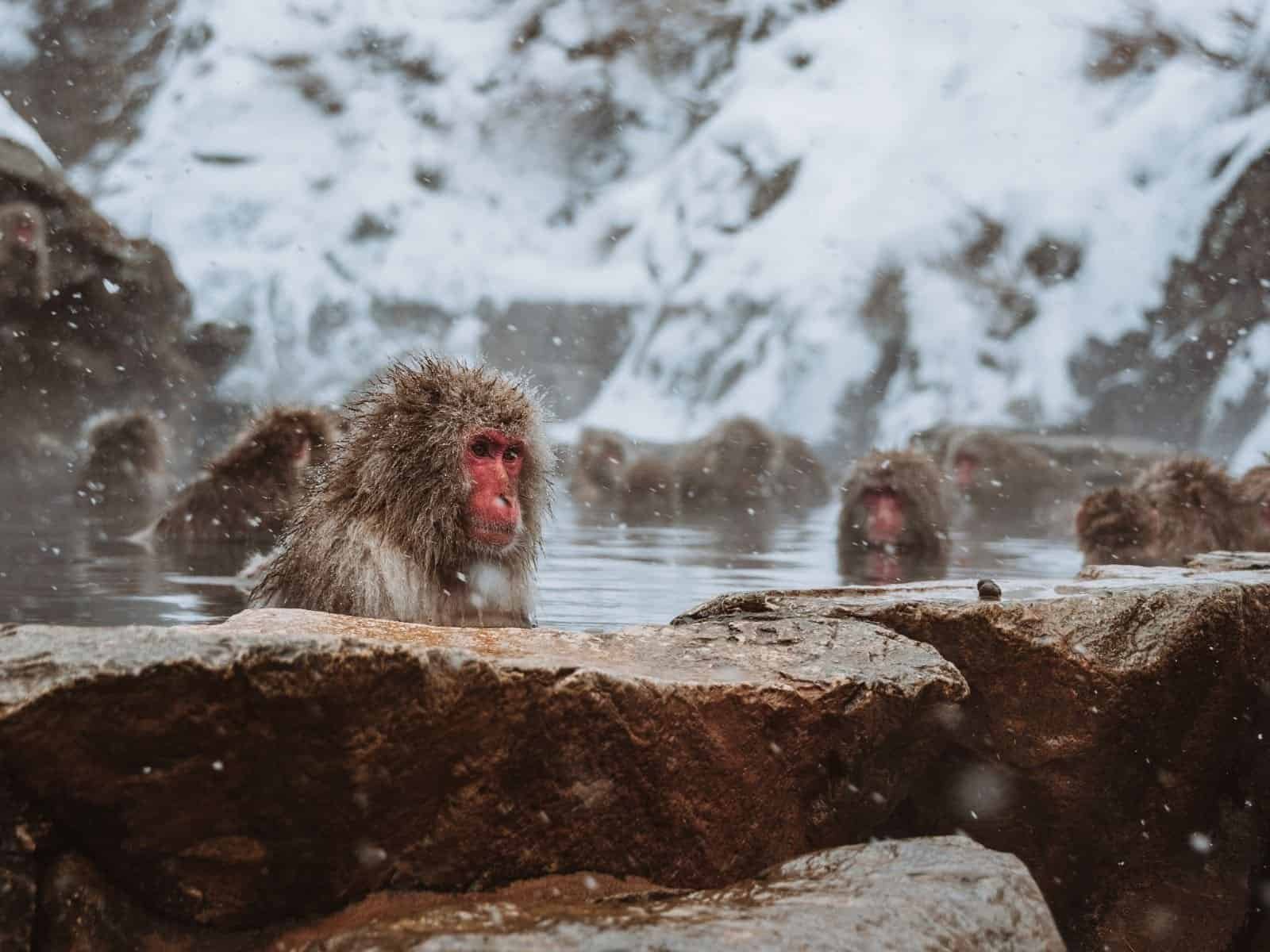
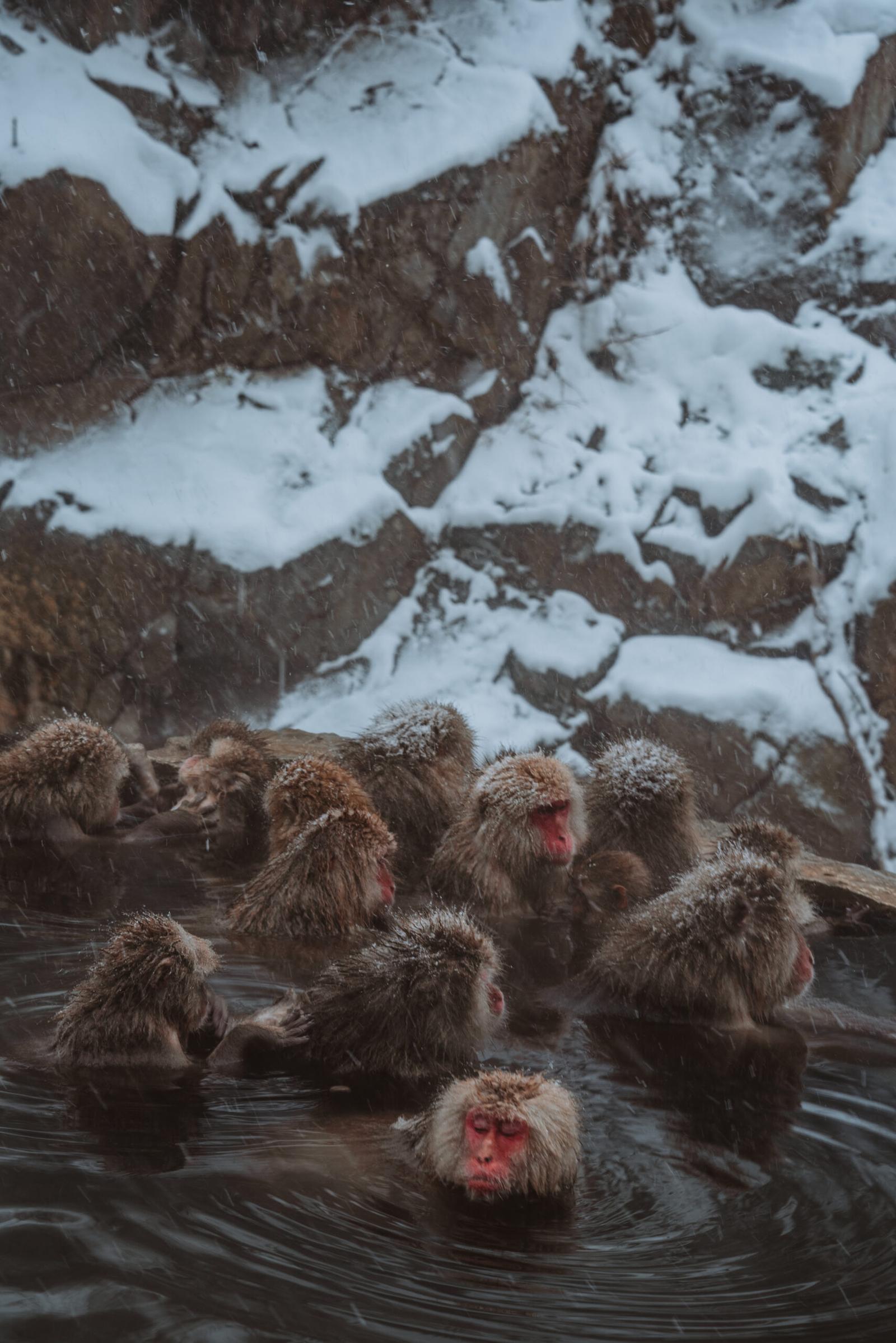
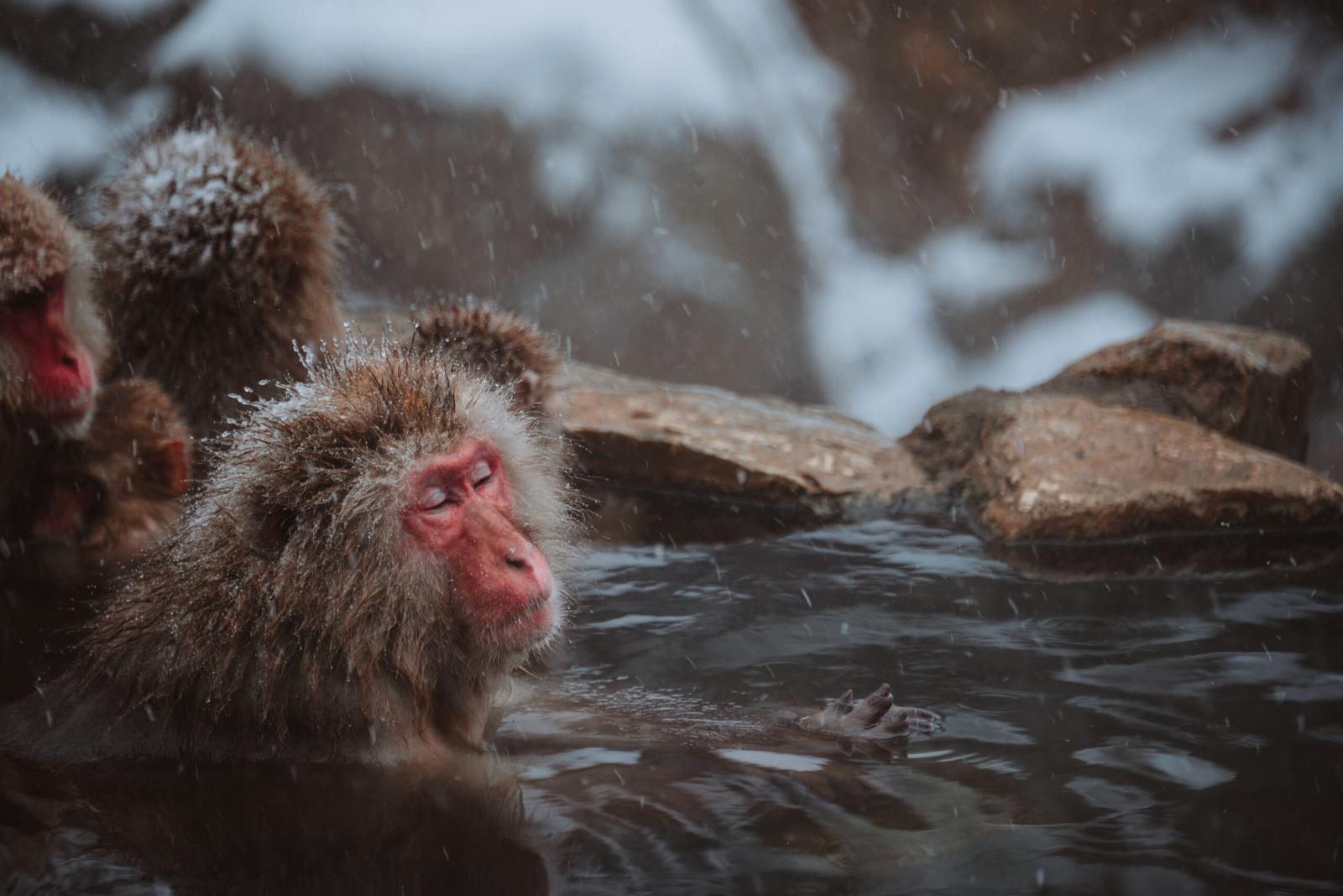
The Jigokudani Snow Monkey Park (Jigokudani Yaen-Koen) is home to wild Japanese macaques who roam freely around the valley or more famously, soaking in the riverside hot springs.
It’s not a zoo or a tourist theme park; the monkeys live here naturally, and visitors simply walk into their world to watch one of Japan’s most iconic winter scenes unfold.
Where is Jigokudani Yaen-Koen – Snow Monkey Park?
Jigokudani Yaen-Koen (Snow Monkey Park) is in the mountains of Nagano Prefecture. Just outside the onsen towns of Yudanaka and Shibu Onsen.
It sits inside the Joshinetsu Kogen National Park, about 45 minutes from Nagano City, making it an easy winter day trip. However, you might be convinced to extend that by the end of this post.
How to get to Jigokudani Snow Monkey Park?
Nagano is the most direct base for visiting the Snow Monkey Park, with fast shinkansen connections from Tokyo and other major cities.
🚏Taking the BUS to Jigokudani Snow Monkey Park
The easiest and most direct option is the Nagaden Express Bus or the Shiga Kogen Express Bus that runs directly from Nagano Station to the Snow Monkey Park area
⏱️ 45 minutes
The bus drops you relatively close to the park entrance, making it especially popular in winter. Although the walk starts off a little steep and slippery…
🚏How to get Bus tickets for the Snow Monkey Park
Nagano Station can get quite chaotic in the winter months as a popular ski stopover, so to save you the stress and unnecessary wait in the wrong line…
You are best to get tickets directly from the Nagano Station East Exit dedicated Snow Monkey office. This is right in front of the Snow Monkey Park Express bus stop. Please note this may be subject to cahnge with recent peak season mandatory ticketing updates.
Most are best to ask for Snow Monkey Pass for the Express Bus:
JPY6,800 per adult (aged 13+) / JPY3,400 for children (6-12).
This included your Monkey Park entry ticket allowing you to bypass the ticketing line up the park.
However, if you are like us and plan to stay the night you should only get a one way for JPY3000 as the return only has a 24hr window.
🚄Taking the TRAIN + BUS to Snow Monkey Park
- From Nagano Station, take the Nagano Dentetsu Line to Yudanaka Station
⏱️ 45 minutes - From Yudanaka Station, take a local bus toward the Snow Monkey Park
⏱️ 15 minutes - Walk the forest trail to reach the monkeys
1.6 km / ⏱️ 25 mins to 1 hr depending on conditions.
🚕 Taking a CAR to Jigokudani Snow Monkey Park
Driving from Nagano City or nearby towns is possible and gives you way more flexibility with timing but with recent parking changes and often dangerous conditions, it is not ideal.
⏱️ 45 minutes from Nagano City
However, the roads get really snowy and/or icy during the winter (which is most likely when you would visit the SNOW monkeys anyway), so snow tyres or chains are essential.
This option is ideal if you’re staying nearby or travelling with luggage, but keep in mind public transport is often safer for most in winter.
Klook.com🚕 Hire a PRIVATE DRIVER or TOUR to Jigokudani Snow Monkey Park
You may pay more money but it often brings less stress to what can be a chaotic experience with unpredictable conditions. Oh and now the added bonus on confirmed entry during peak times!
This option is especially handy in winter, with children, or if you want a more comfortable, hassle-free trip. Many tours also include stops at Shibu Onsen, Yudanaka Onsen, or other nearby sights, and some even add lunch or hot spring access (not with the monkeys sorry)
I loved having a private driver on my first visit, not only for the ease and a car park closest to the park entrance, which saved a very steep and slippery walk up the hill, AND he also gave me his extra snow jacket to wear, as I was wildly underprepared for the day.
BEST JIGOKUDANI SNOW MONKEY PARK TOURS
Klook.comIs Jigokudani Snow Monkey Park really worth visiting?
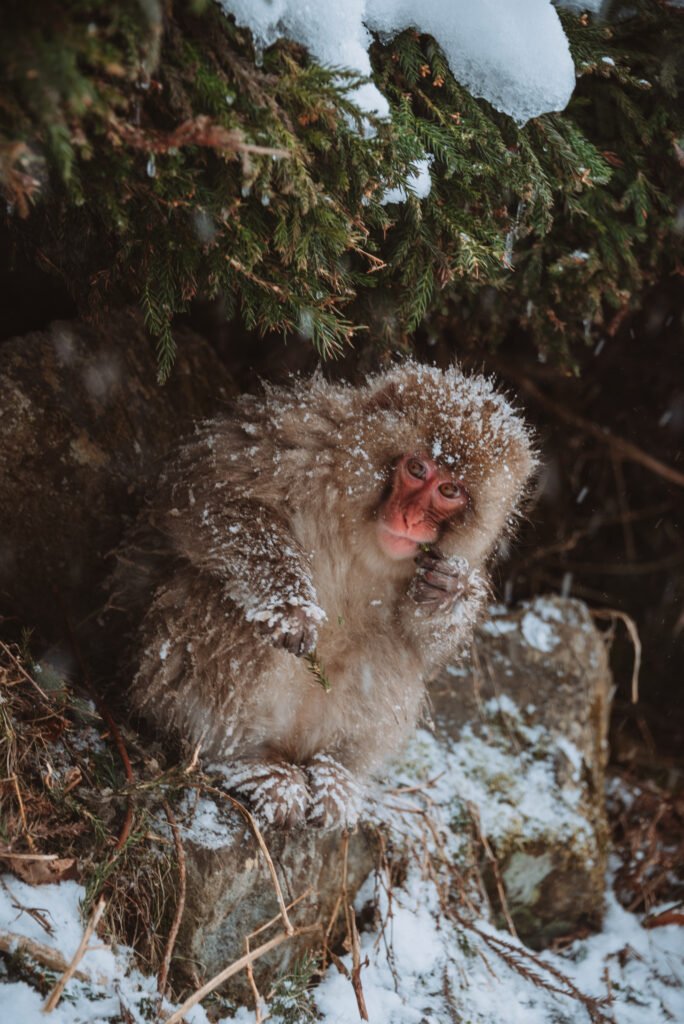
While I will get into a nitty gritty breakdown for you as this post goes on, I know many of you just want to know up front, and the simple answer is A BIG YES, even despite the crowds!
In fact, I ranked Jigokudani Snow Monkey Park at the very top of my 33 Unique Things To Do in Japan list. Yet dare I say it would rank up there as one of the most unique travel experiences to have in the world.
The not so simple answer, is that is may not be suitable for everyone, nor every trip as it is primarily a winter activity with accessibility limitations.
The Best Time to Visit the Snow Monkeys


The Park is open all year round BUT the iconic experience you have seen flooding your feeds is not so listen up.
Winter (December – February) – Your Iconic Snow Monkey Experience
This is PEAK SNOW MONKEY SEASON with the valley blanketed in snow, and monkeys most likely to be soaking in the steaming hot springs.
With that, it is also HIGH tourist season so you can expect more crowds and tour buses coming through too. Watch out, this also happens to be mating season.
Spring (March – May) – Baby Season & Mild Weather
You will often still get snow coming into this season with temps cool enough to still keep the monkeys regularly in the springs. In saying that, things do start to get pretty sloshy and muddy on the paths, so be extra careful.
I would say it is worth it because this is when the baby monkeys are born, making for an even more unique photo op and experience. If you’re lucky, you may catch a few cherry blossoms blooming too.
Summer (June – August) – More Flowers, Less Monkeys
The monkeys are more actively foraging throughout the forest so the chances of seeing them by the hot springs are slim but not 0…
It’s a stunning summer hiking spot, but maybe not the best monkey spot, since they can go days without sighting as they scatter through the forest.
Autumn (September – November) – Fall Foliage
The Autumn colours are slowly taking over cherry blossom season as the IT thing for Japan Travel.
And while you may get some stunning leaves across the valley, the monkey sightings are still not consistent until the temps start to drop more and snow sets.
So, When IS the Best Time to Visit the Snow Monkeys?
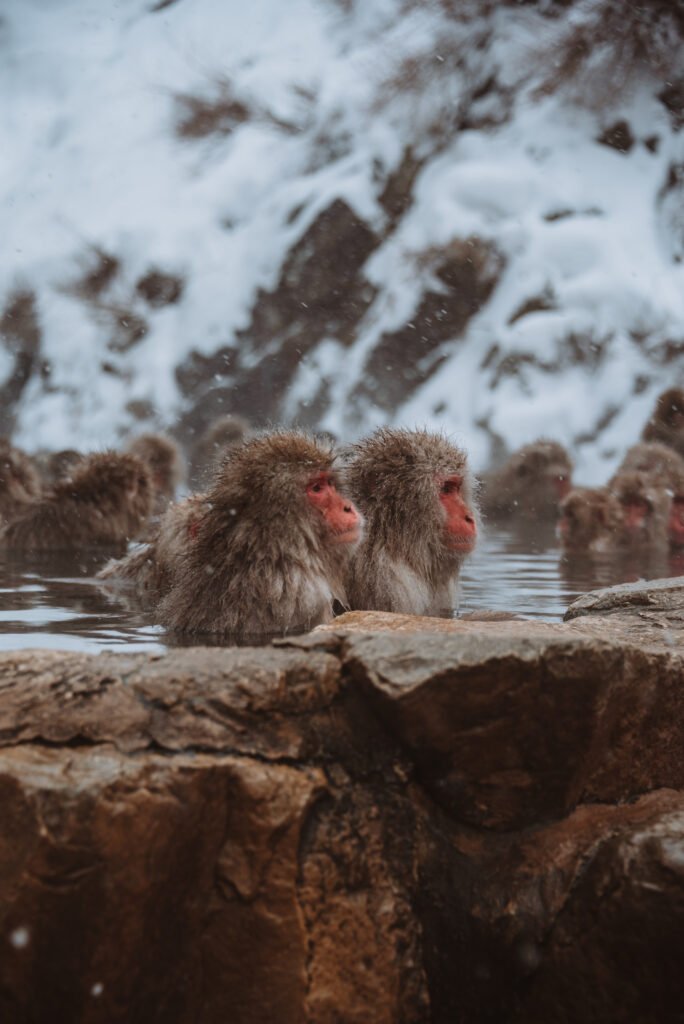
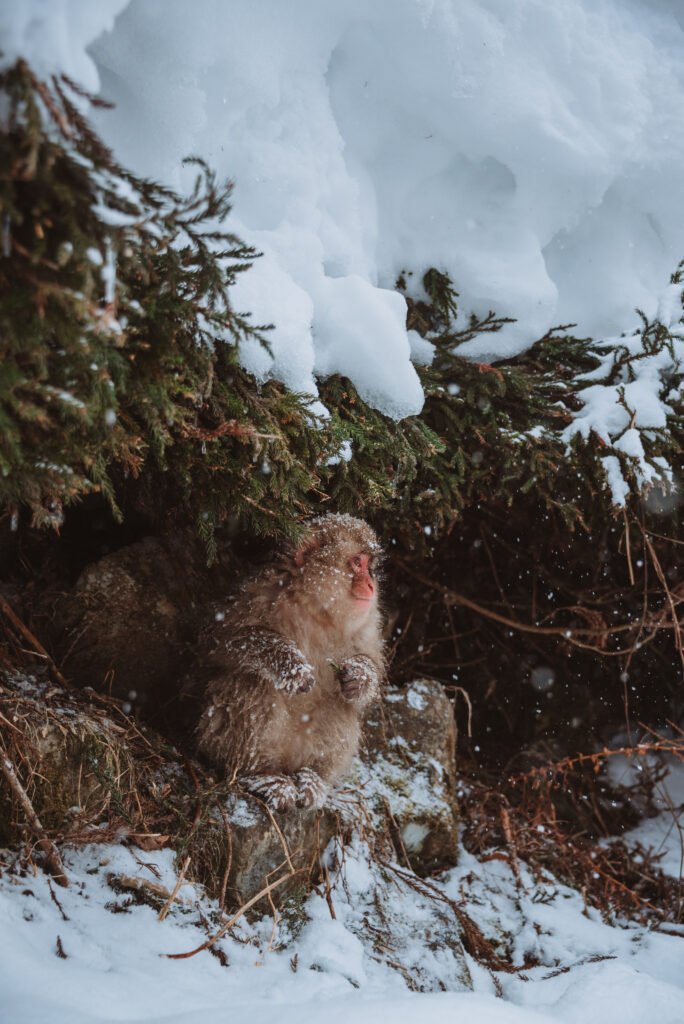
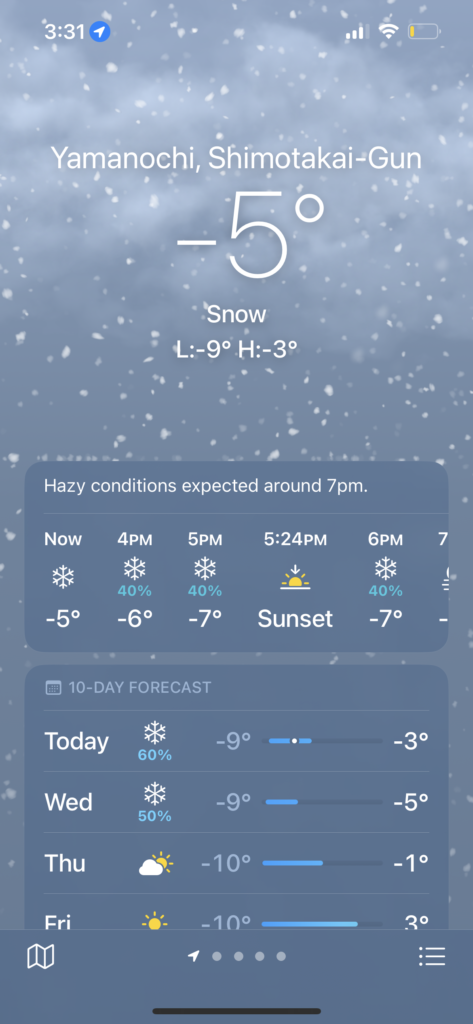
December to February is the prime time for the iconic snow-covered monkey hot spring scenes, though Spring is ideal if you want to see baby monkeys and enjoy milder hiking conditions.
Snow Monkey Park Hours
APRIL to OCTOBER: 8:30 am – 5:00 pm
NOVEMBER to MARCH: 9:00 am – 4:00 pm
Again, the park website updates these opening times daily on this web page.
How to Buy Tickets for Jigokudani Snow Monkey Park – UPDATED
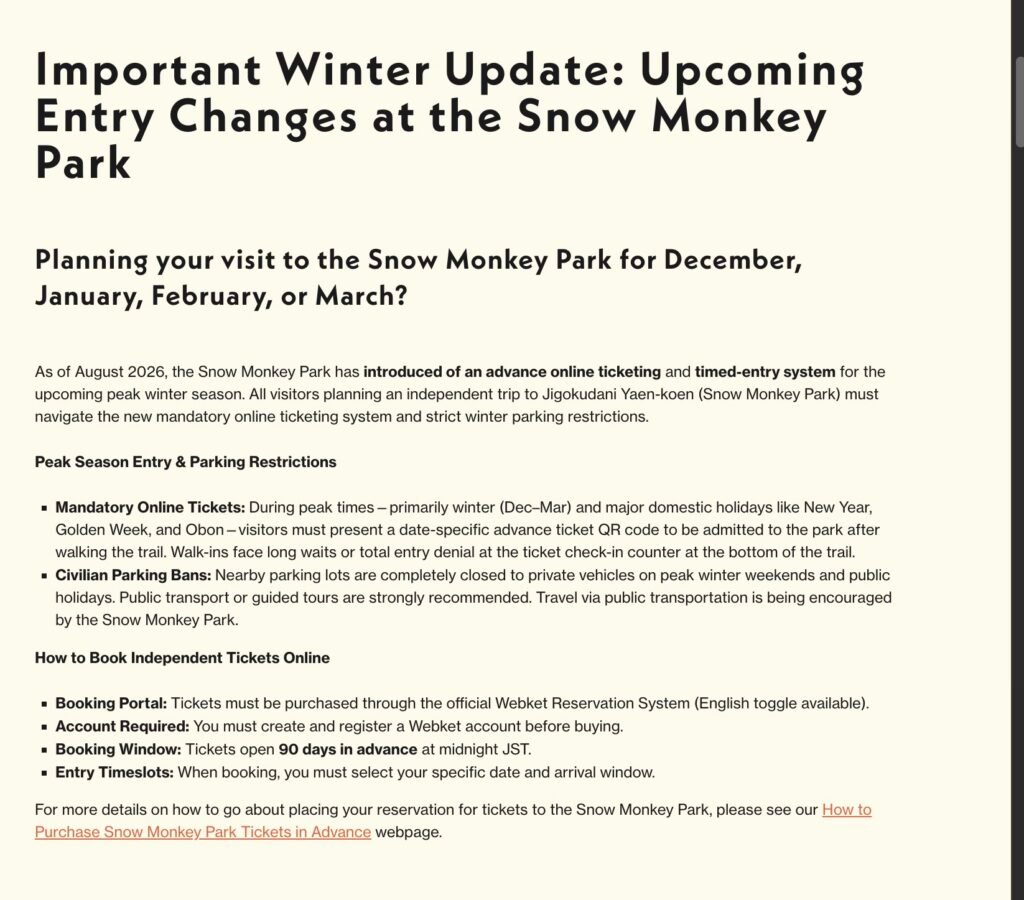
Unlike Japanese theme parks like USJ or Tokyo Disneyland, Jigokudani Snow Monkey Park tickets are simple and easy to get. Although things did get a little more tricker recently…
Where do I buy Jigokudani Monkey Park tickets?
Originally, if you didn’t already buy the JPY6,800 Snow Monkey Pass with return Express Bus, you can purchase tickets on arrival at the park ticket booth for JPY800.
However, recent updates in order to counter overtourism and maintain monkey/human safety has set MANDATORY ONLINE TICKETS FOR PEAK SEASONS. These tickets must be reserved online via the official Webket Reservation System.
Beyond the above screenshot, here is the official Snow Monkey Resorts website guide on how to purchase tickets in advance for the Snow Monkey Park.
About Jigokudani Snow Monkey Park Tickets
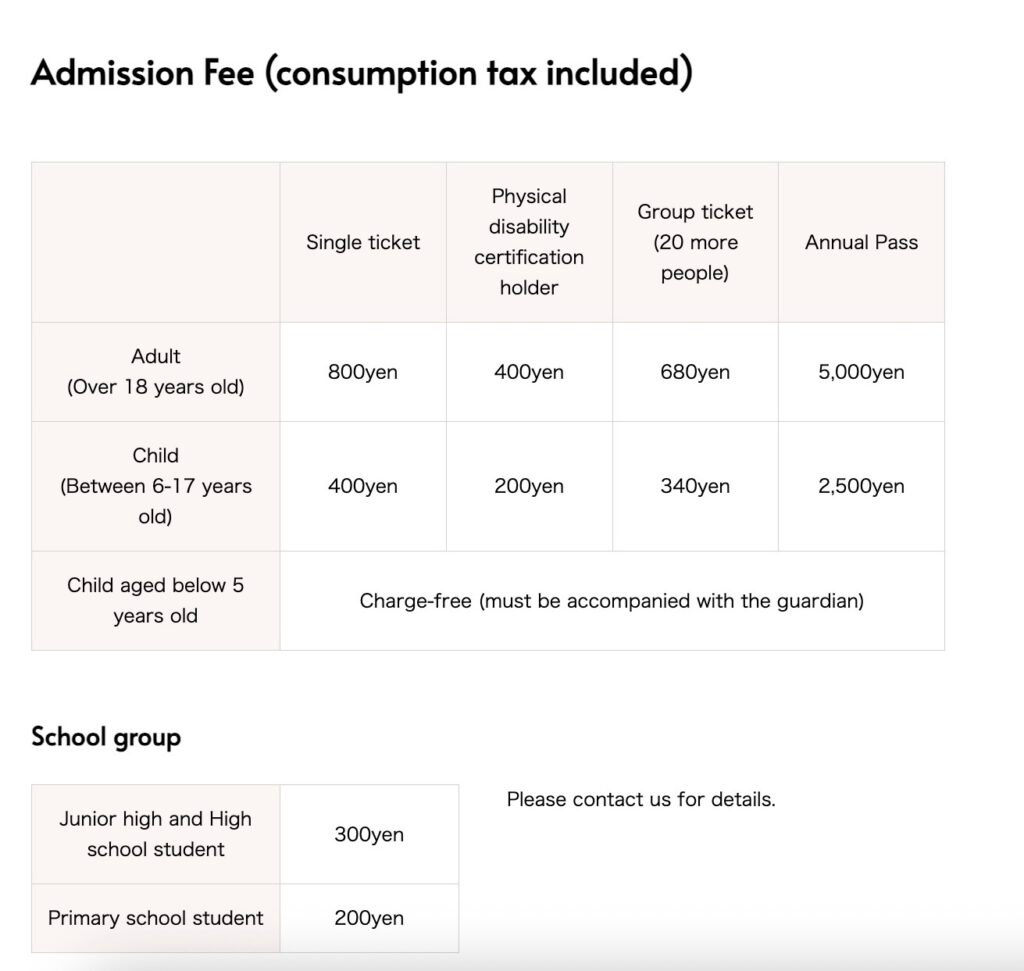
For the most up to date ticketing information and park hours, it is best to visit Jigokudani Website
This is their current pricing structure. Make sure to double-check before your visit and bring cash accordingly, as card acceptance is limited in the area.
Best Jigokudani Snow Monkey Park Day Tours
And honestly, after the recent mandatory ticketing updates, these tours now have the added bonus of confirmed entry and stress-free travel.
Klook.comWhat to Expect at Jigokudani Snow Monkey Park
Arrival
Whether you caught the train, bus, taxi or drove yourself, you start on a big hill where all of the main cafes and carparks are right before you enter the Jigokudani walk.
In winter this gets very slippery so be careful especially as there are cars that drive around. Take your time and have a break in any of the shops along the way whenever you need to. You may want to pick up a pair of crampons.
The Walk
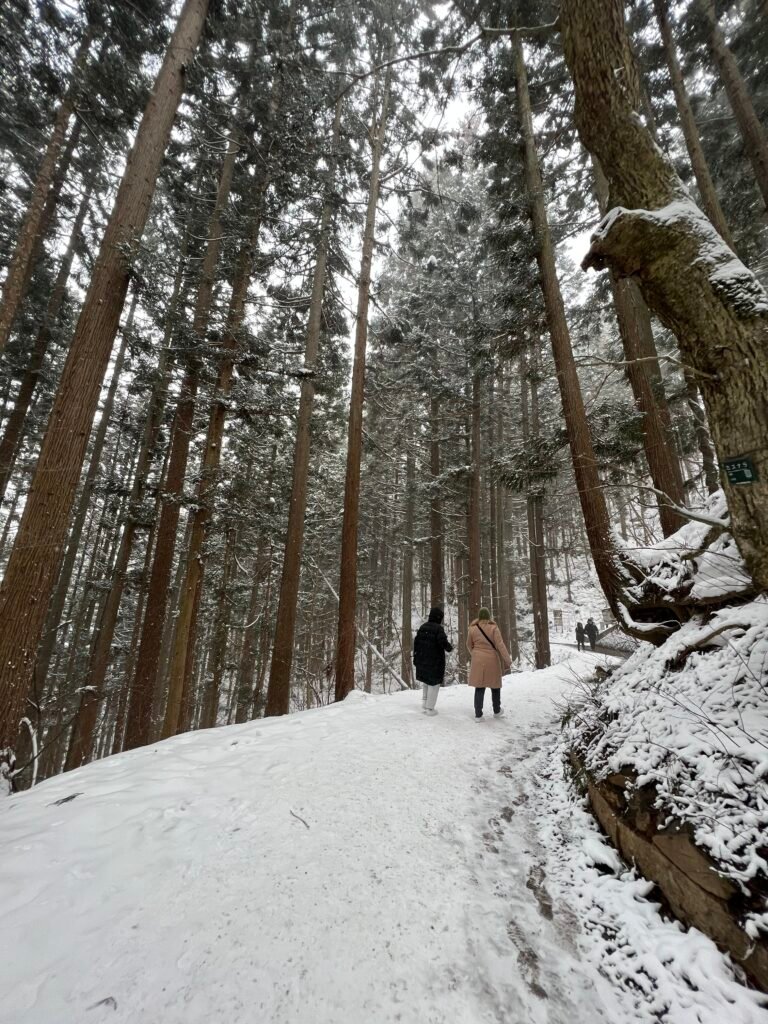
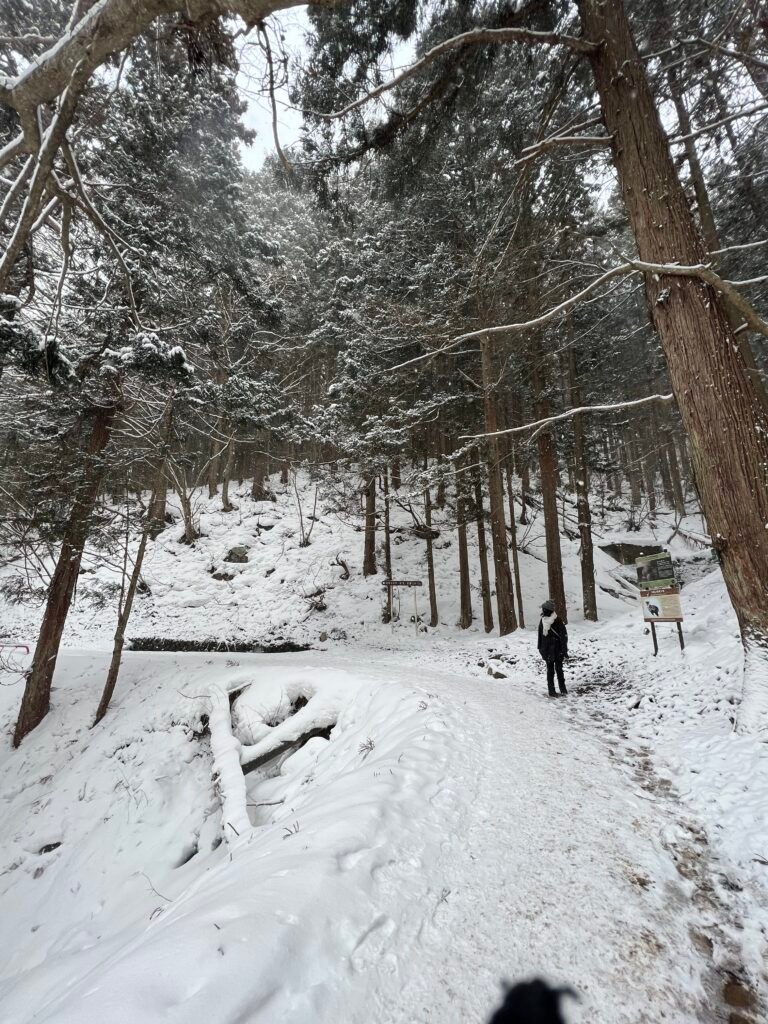
The walk starts with a big welcome sign clearly stating the beginning of you 1.6km walk with a mix of stairs and winding mountain paths leading you into the valley.
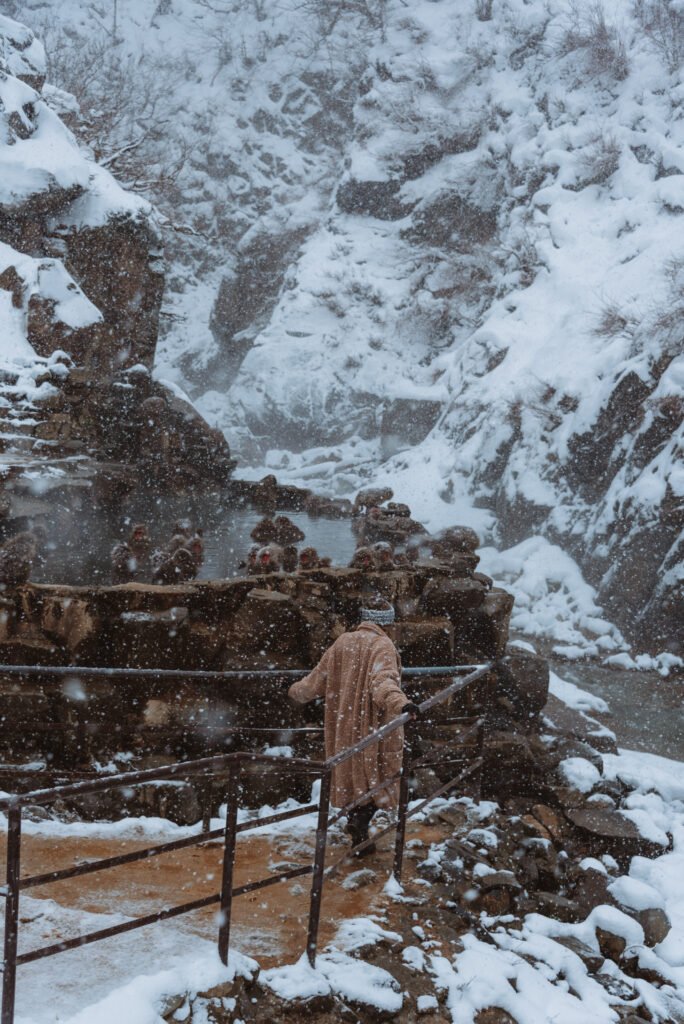
It is well signed and well kept but do not let that get you too cocky. This path gets incredibly icy, sloshy and slippery. No matter the season, you need good walking shoes and a basic level of fitness/common sense.
With the hope of onsen bathing monkeys, it can be easy to want to rush this, however I am serious when I say to take it slow. Not just for safety but also to take in how incredible this scenery is!
Reaching the Valley and Main Park Gate
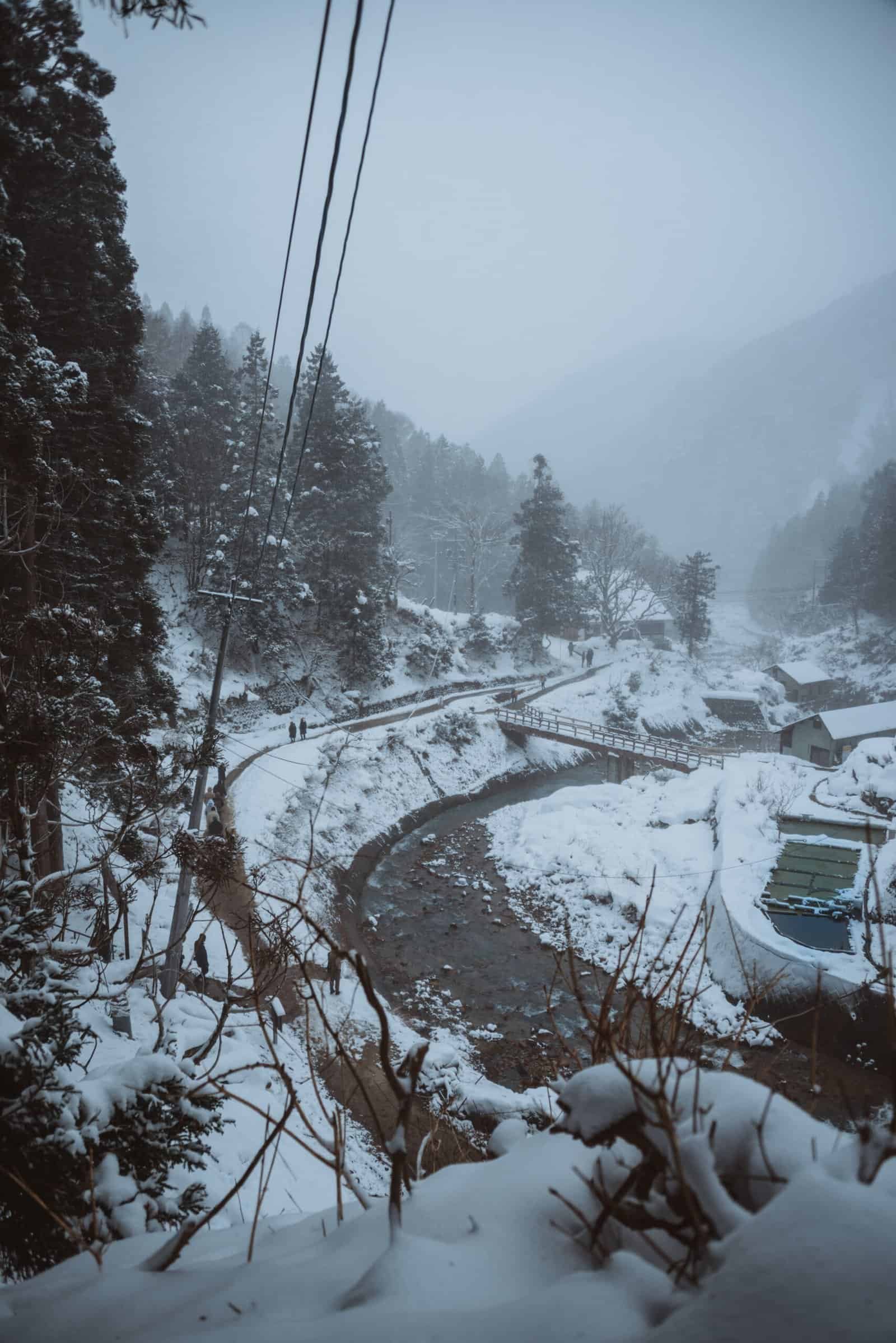
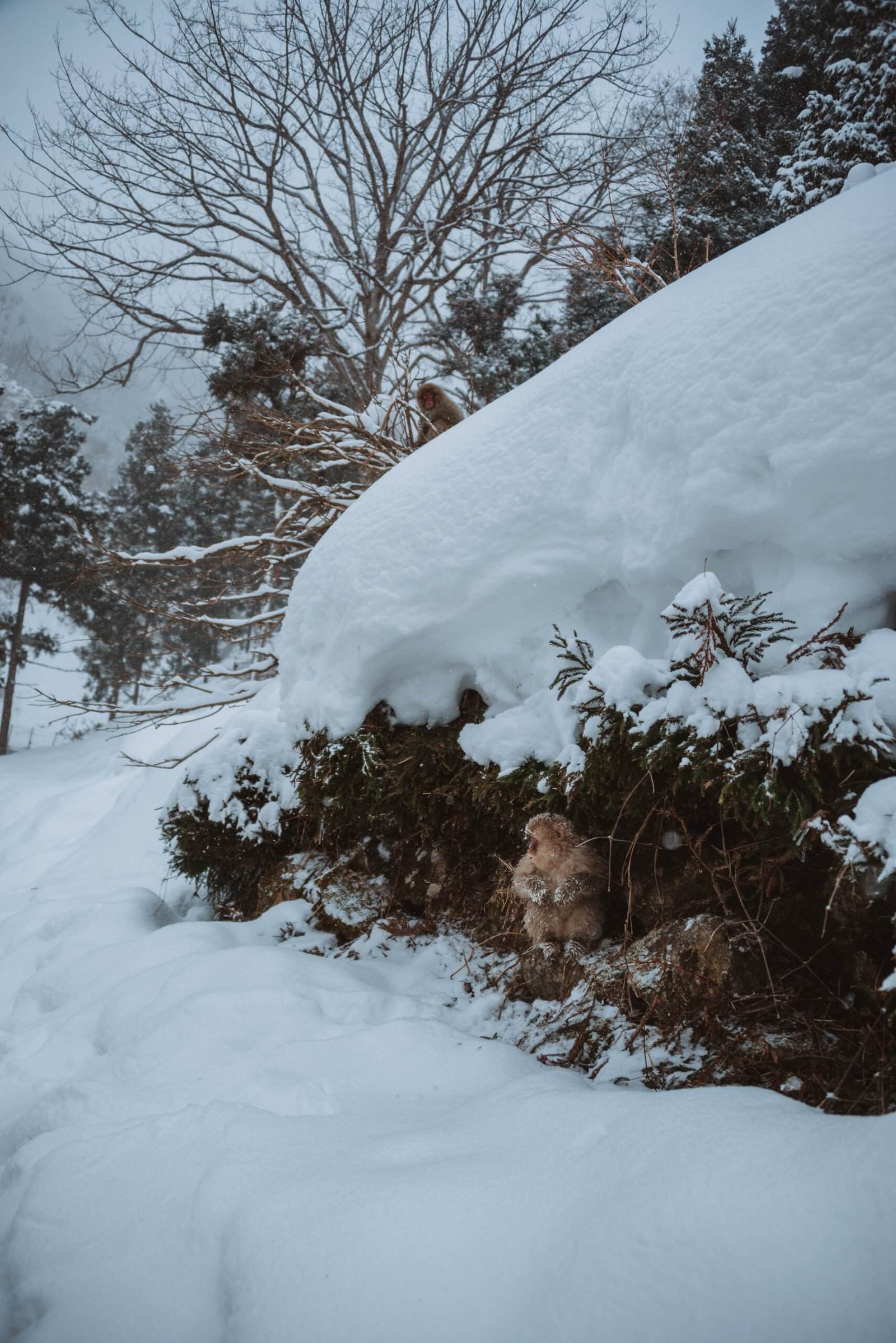
Congrats you survived the hike and you may have already been welcomed by a few cheeky monkeys!
Here you come across the main park gates where you purchase your tickets. This is also a great chance to usee the restrooms or simply warm up for a second inside.
Understandably, this has become a very popular destination in Japan so be warned that lines can get long during peak season and times. The Park has put out a notice ahead of the next big winter season with a few system changes worth keeping an eye on – read it here.
Once you secure your ticket and click over those turnstiles, it feels like you step through the door to Narnia as you open up on top of the valley overlooking the river below. Again, take your time for your own safety and also not to miss any other monkey magic… you never know where they may pop up!
Spot the Snow Monkeys
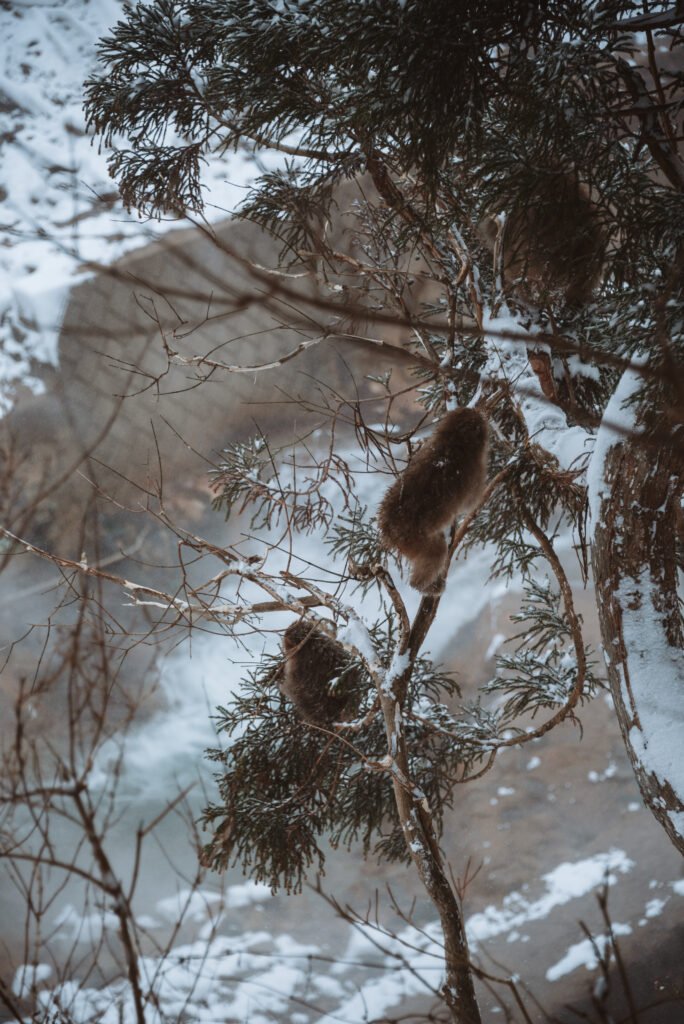
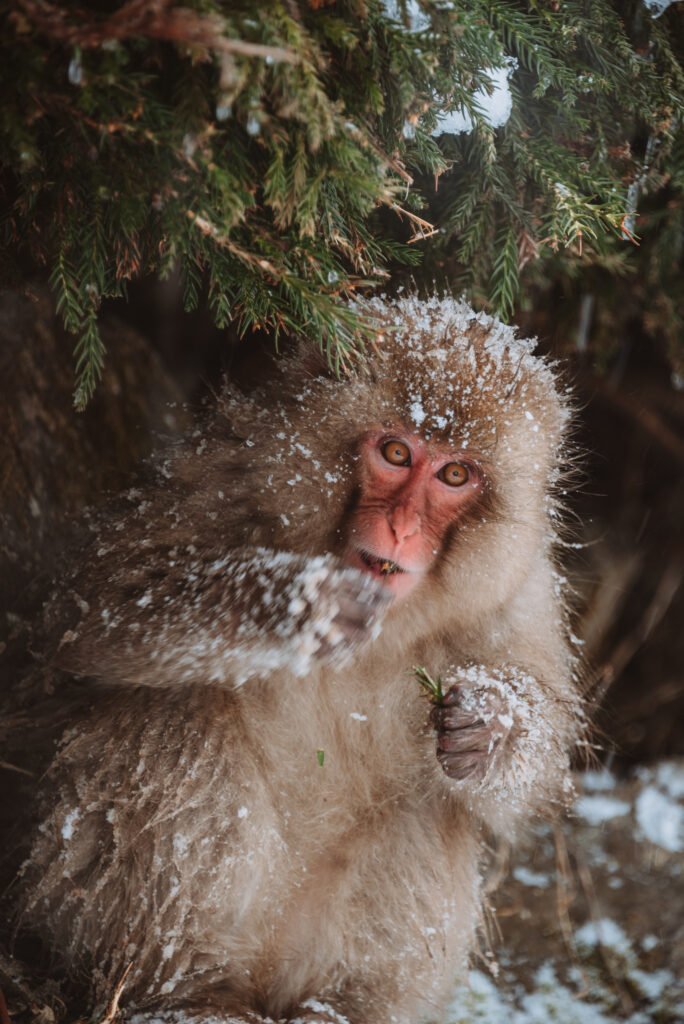

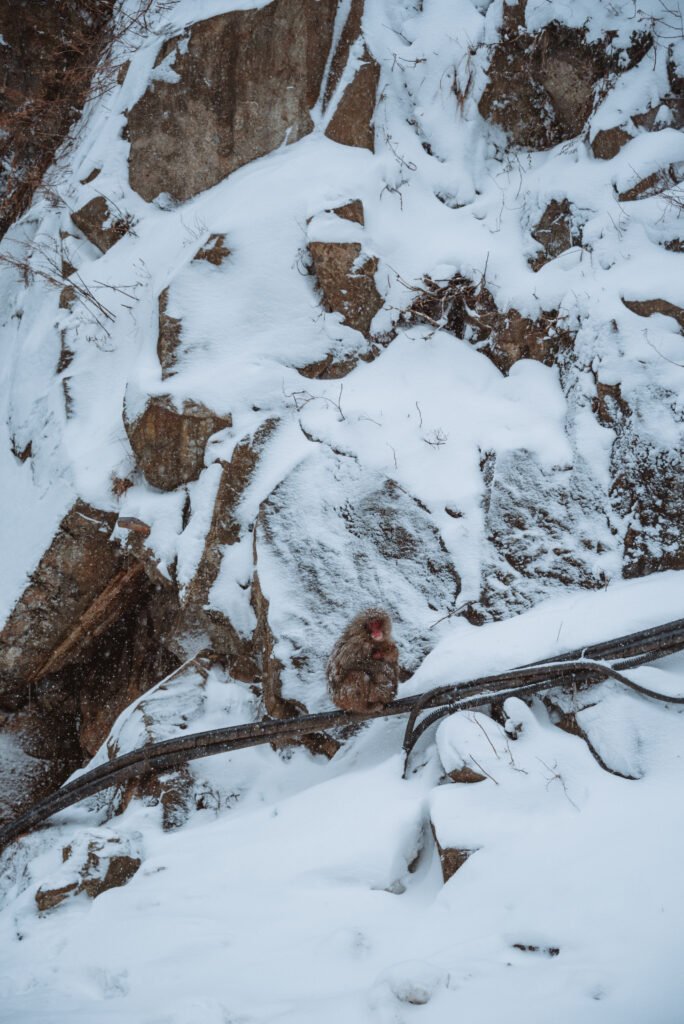
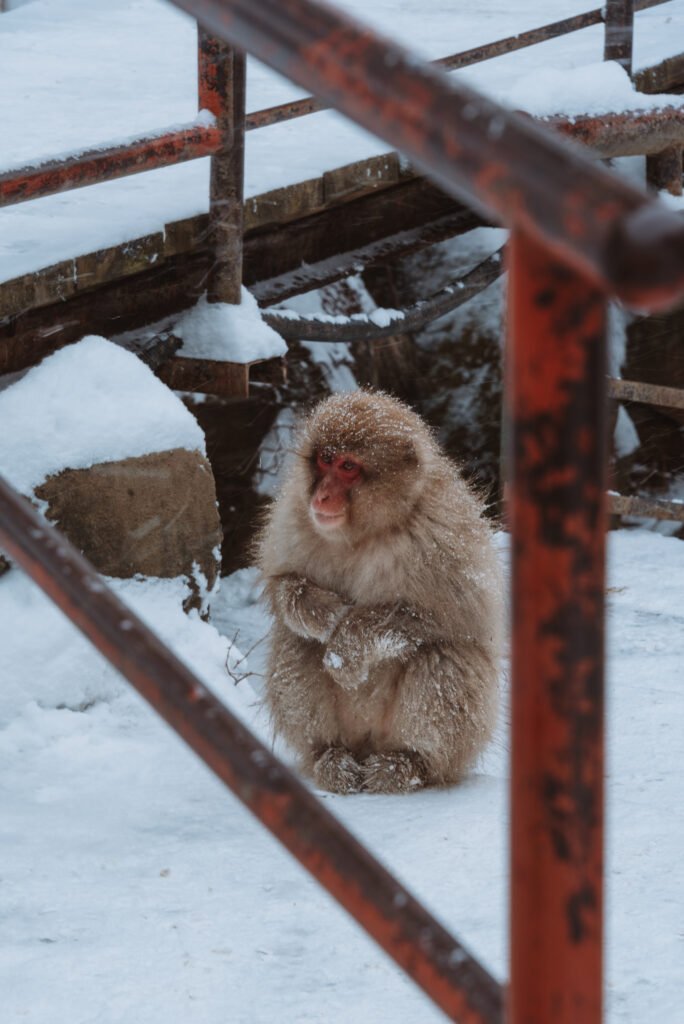
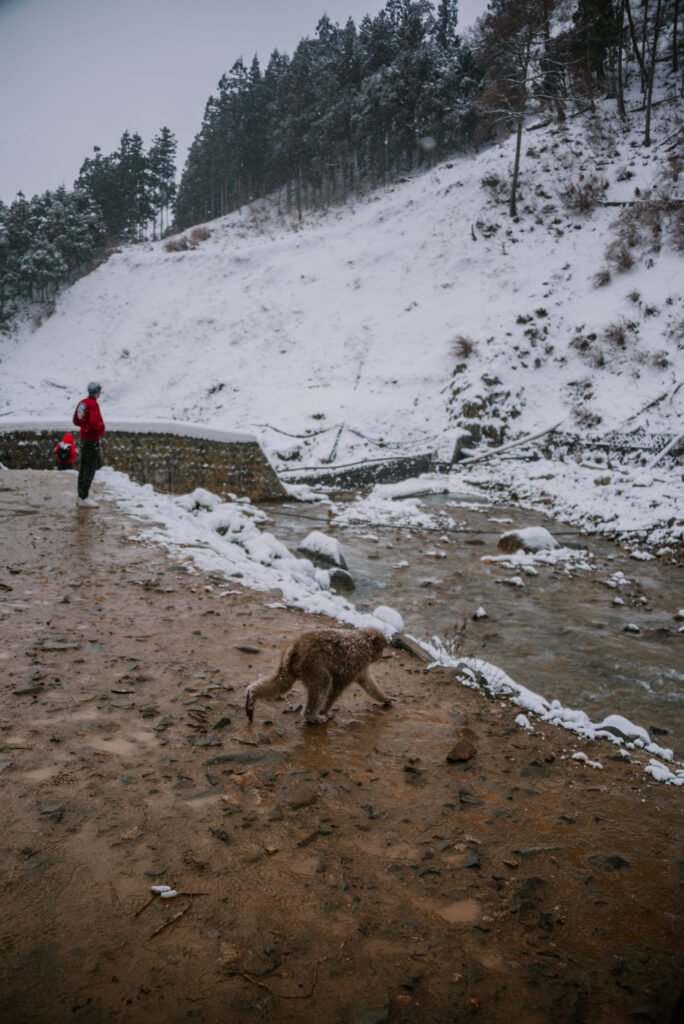
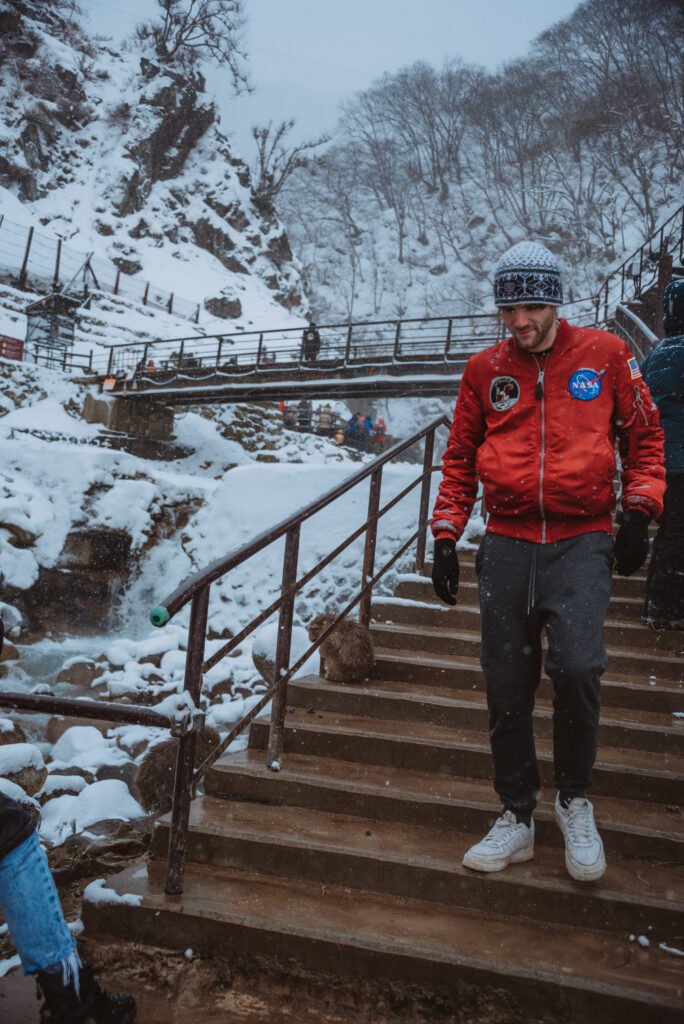
Of course everyone wants to go see the famous snow monkey onsen yet many don’t realise that there are monkeys galore all throughout the valley. In fact, you may even have to dodge a few on the main pathways.
The Snow Monkey Park is full of suprrises and well worth taking your time to enjoy every bit of not just rushing to the one famous photo spot. Funnily enough, my favourite photo from the day was the first monkey I saw curled up under a snow covered tree right outside of the ticket office.
I should warn that the main paths here across the bridge and by the river are some of the slipperiest with the added hazard of potential monkey crossings. Of course, you need to keep an eye out for the monkeys but do not forget to keep an eye on yourself and where you are going.
The famous snow monkey onsen
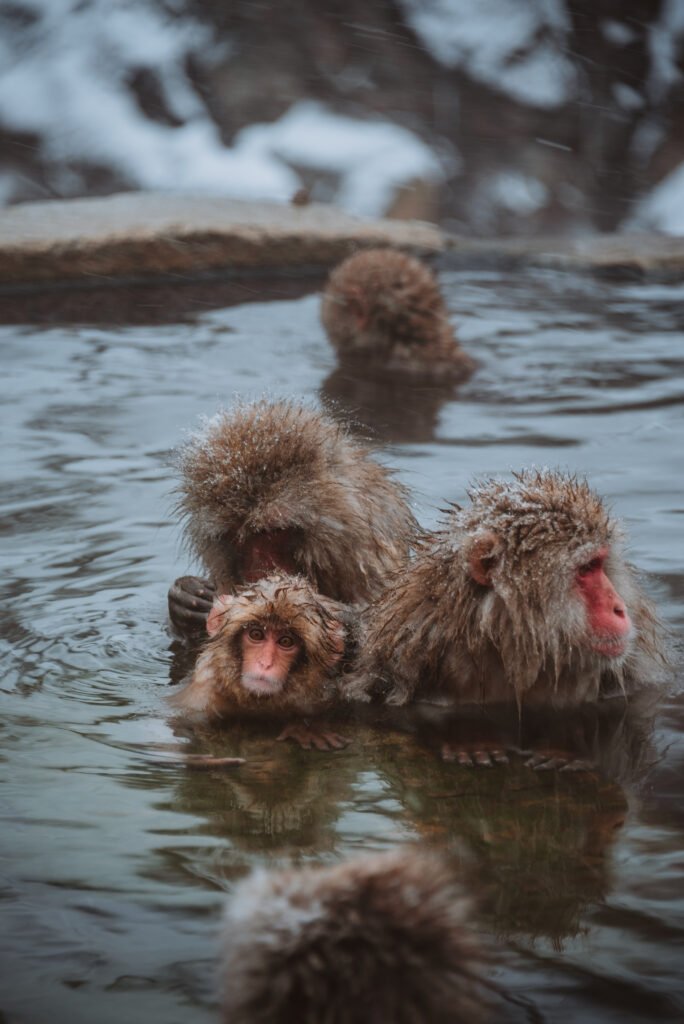
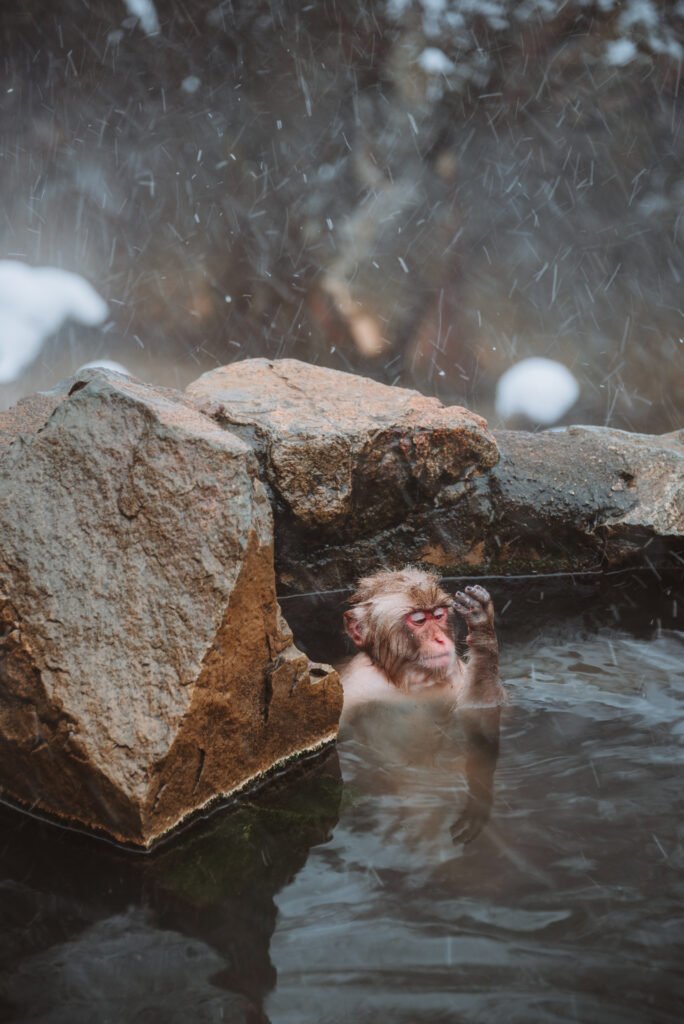
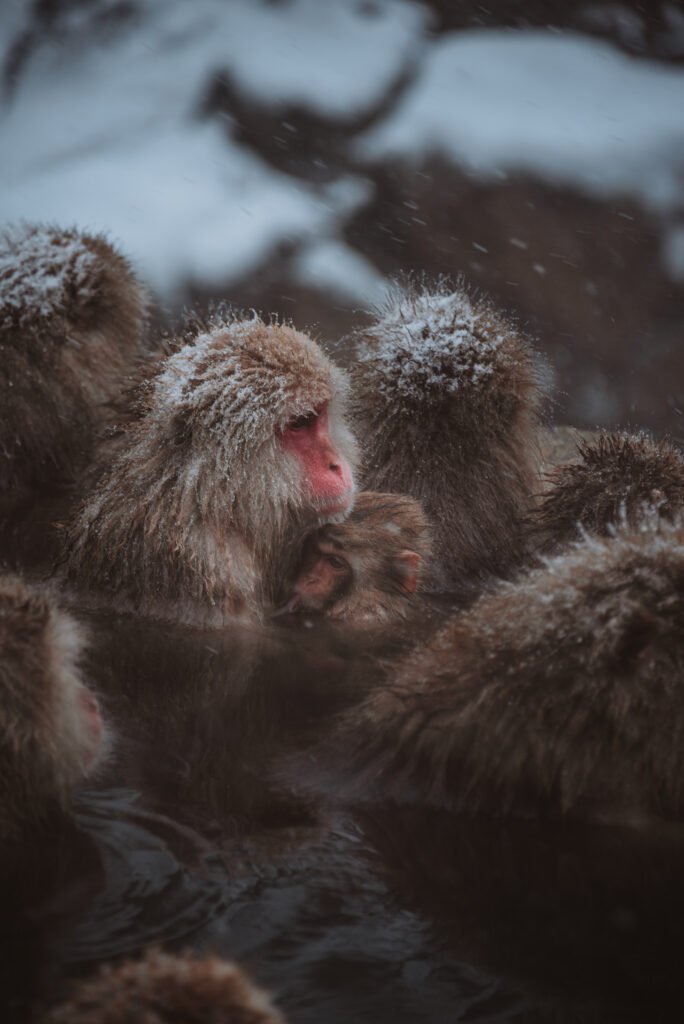
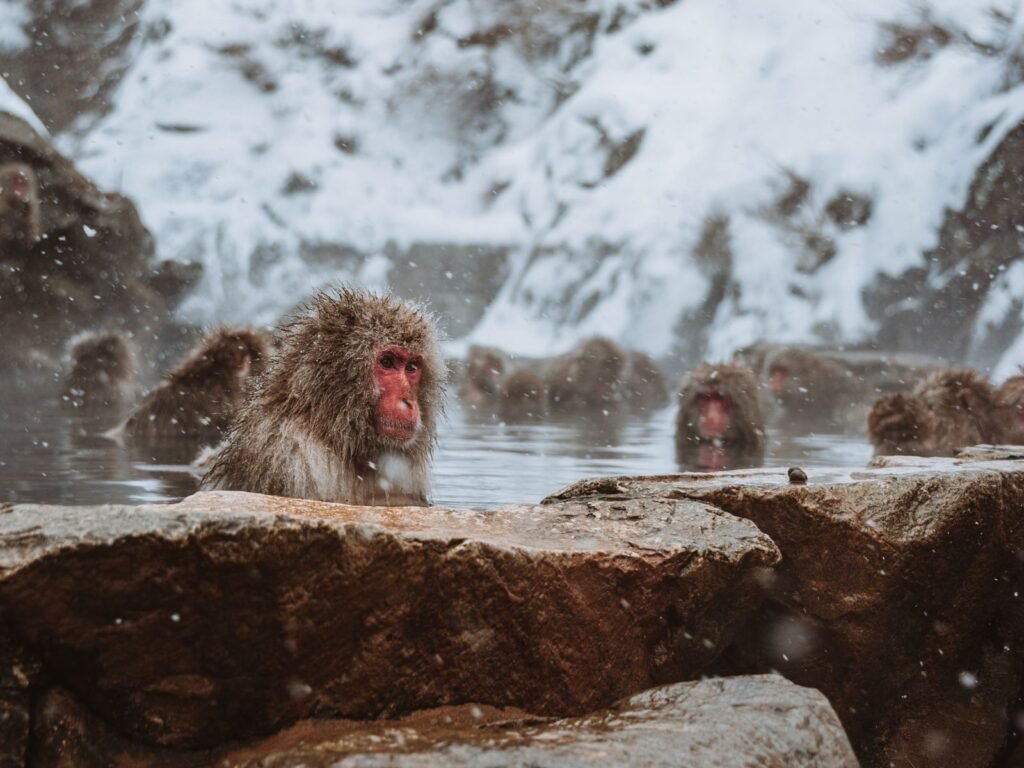
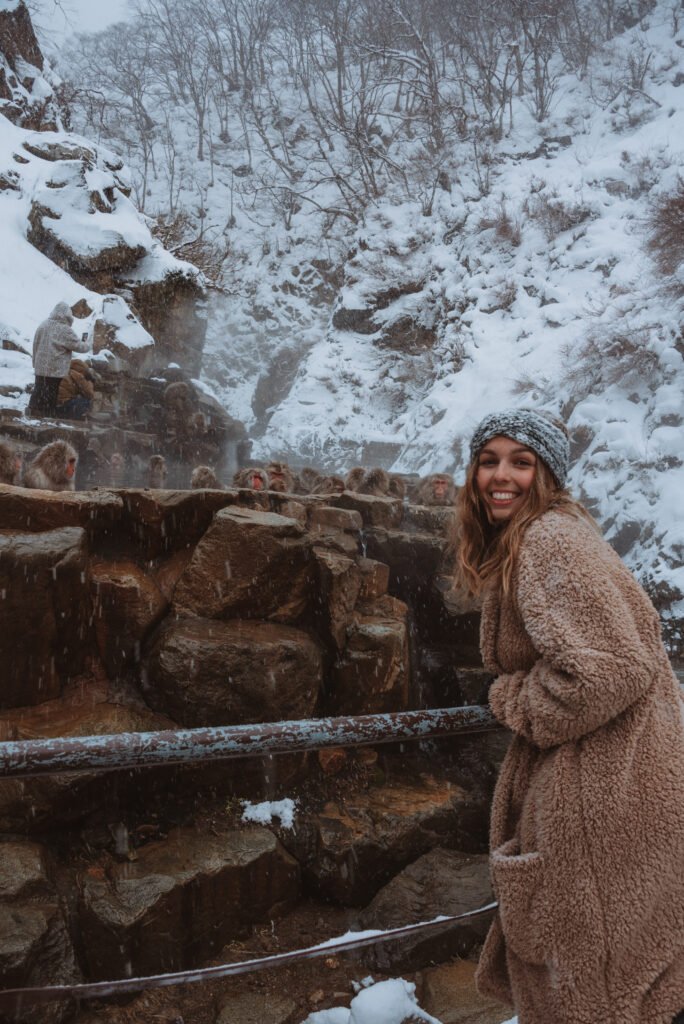
This tranforms into a true winter wonderland across December to February where the monkeys are even more active than usual around the hot spring. Honestly, I don’t blame them because it is COLD in the valley and snow can get heavy quick.
No amount of words, photos or videos can really capture the feeling of witnessing this bizarre yet mystical experience until you see it for yourself. Not to mention every single experience would be different with varied numbers of monkeys, snowfall, people and more!
Avoiding the crowds (monkeys included)

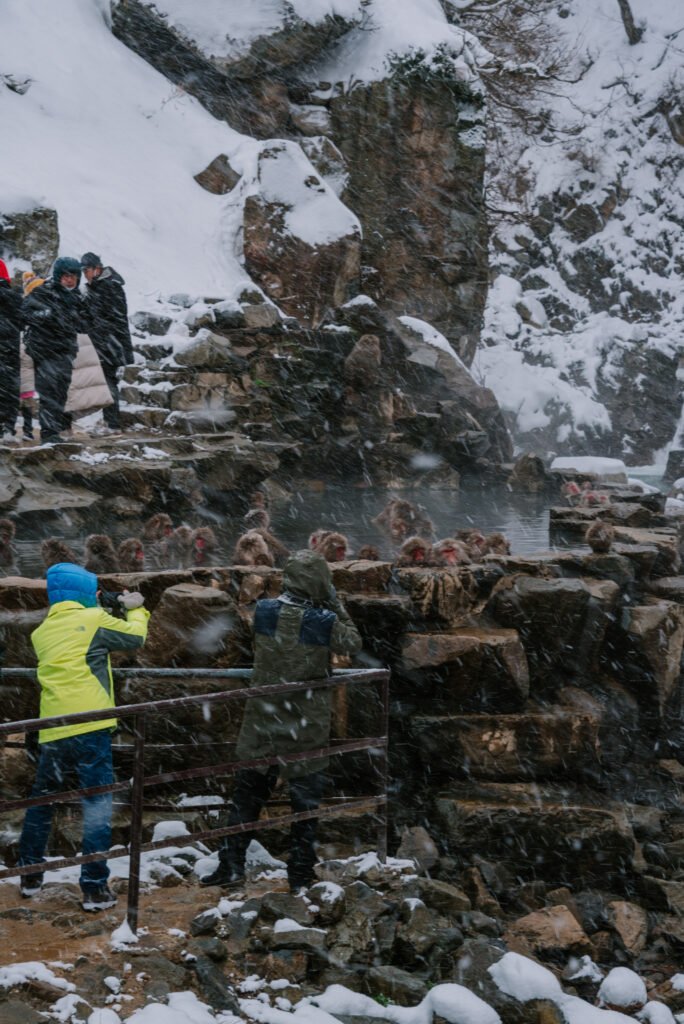
It is not hard to see why this has become one of the most sought-after things to do in Japan winter, and with that has come an increase in crowds.
Although, you will be surprised that even during peak season there are always slow gaps throughout the day (of humans and monkeys), often as those bigger tours group come and go. This isn’t just my first hand experience talking but also something you can take note of daily thorugh the live cam.
Once again, the best advice I can give your for visiting Jigodukani Snow Monkey Park is to take your darn time if possible!
Facilities at Jigokudani Snow Monkey Park

Parking / Transportation Access
Paid parking is available near the park entrance, with several designated car parks along the access road. Parking fees are typically ¥500–1,000 per vehicle, depending on the season.
Food
There are no restaurants inside the park, but cafés and eateries are available near the entrance/parking and in nearby towns like Shibu Onsen and Yudanaka. Even more back in Nagano.
Toilets
Restrooms are available near the park entrance and again close to the monkey viewing area. Facilities are basic but well-maintained.
Souvenirs
The ticket booth doubles as a small shop selling snow monkey souvenirs and seasonal items like hand warmers in winter. Although you will find a bigger range of souvenir shops near the entrance/parking
The Secret Ryokan Stay inside Jigokudani Snow Monkey Park
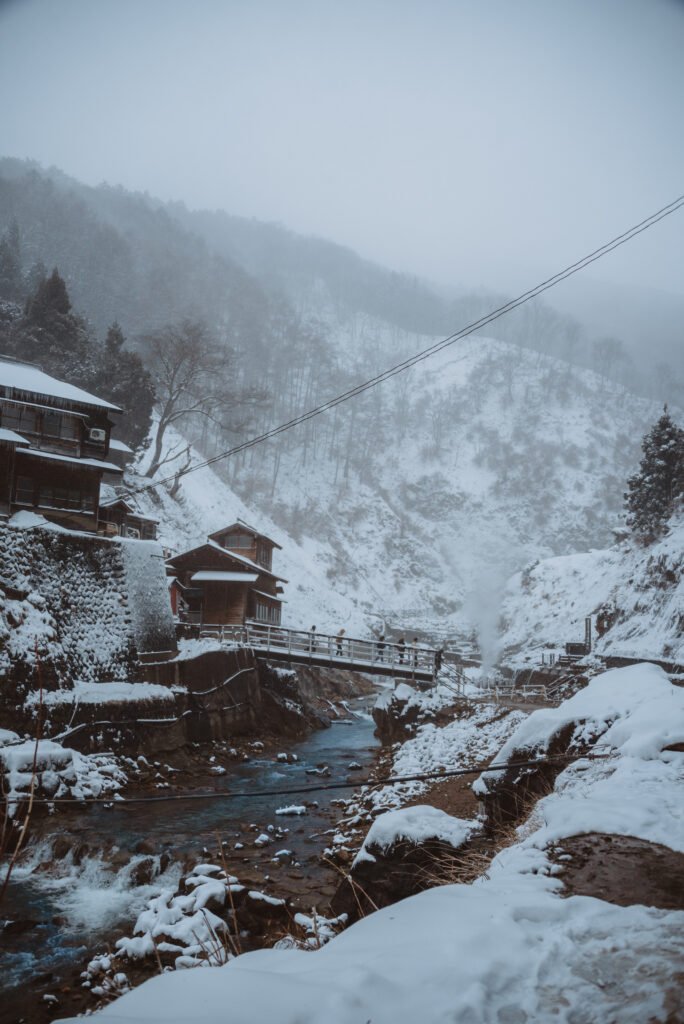
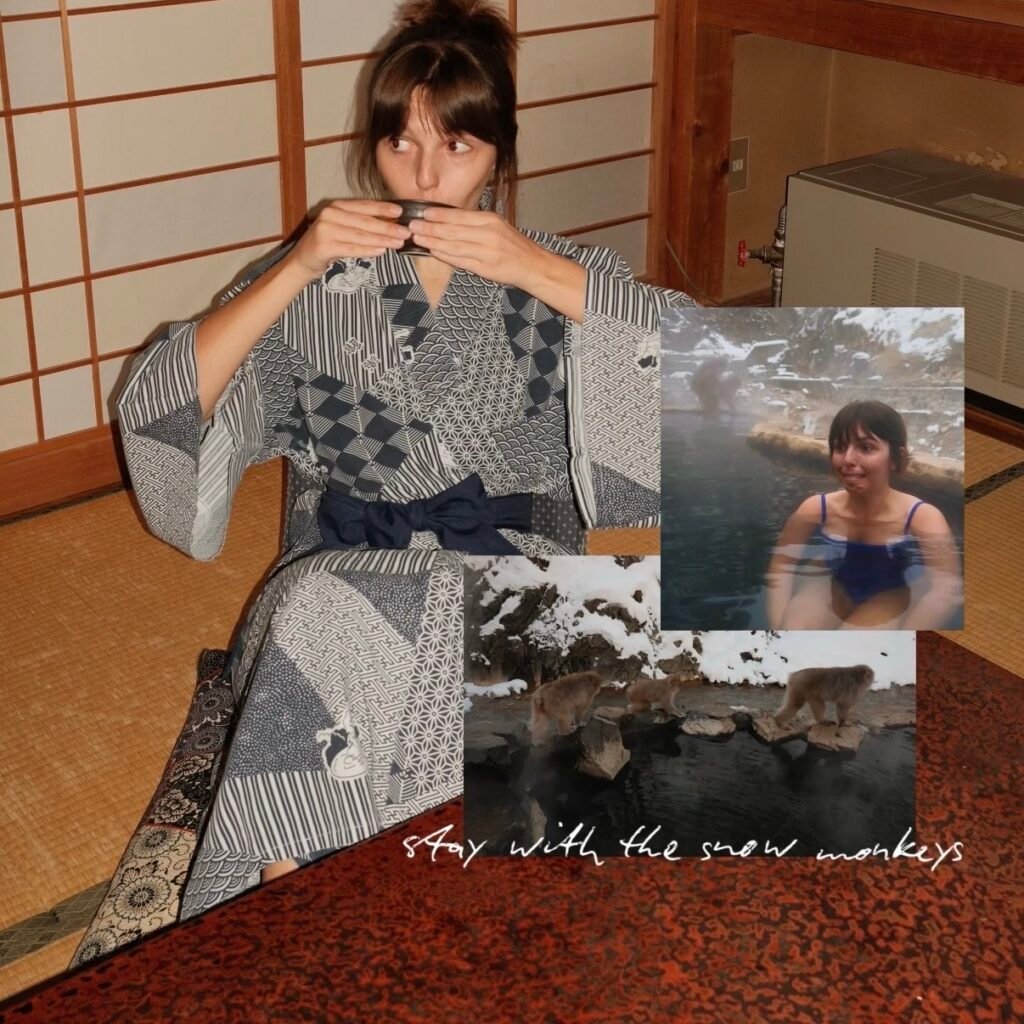
Hidden in plain sight, Korakukan Ryokan is the only accommodation located within Jigokudani Snow Monkey Park. Offering a unique chance to stay and even soak in your own onsen alongside the monkeys. This is rare and quiet access to one of Japans most iconic experiences.
Korakukan Ryokan has deep historical ties to Jigokudani, first opening in the early 1900s as a simple mountain lodge. The ryokan served as a base for scientists studying the Japanese macaques, playing a key role in early primate research that helped bring global attention to what is now the famous Snow Monkey Park.
Where to book the Korakukan Ryokan
The listing still shows up on Trip.com, although currently unavailable for bookings. I would still recommend always comparing between platforms as it will vary season to season.
We made our 2026 reservation via Travel Arrange Japan – a local travel agency who have seriously gone above and beyond in their service.
Where to stay near Jigokudani Snow Monkey Park
I advise figuring out your ideal mode of transport and planning your accommodation accordingly.
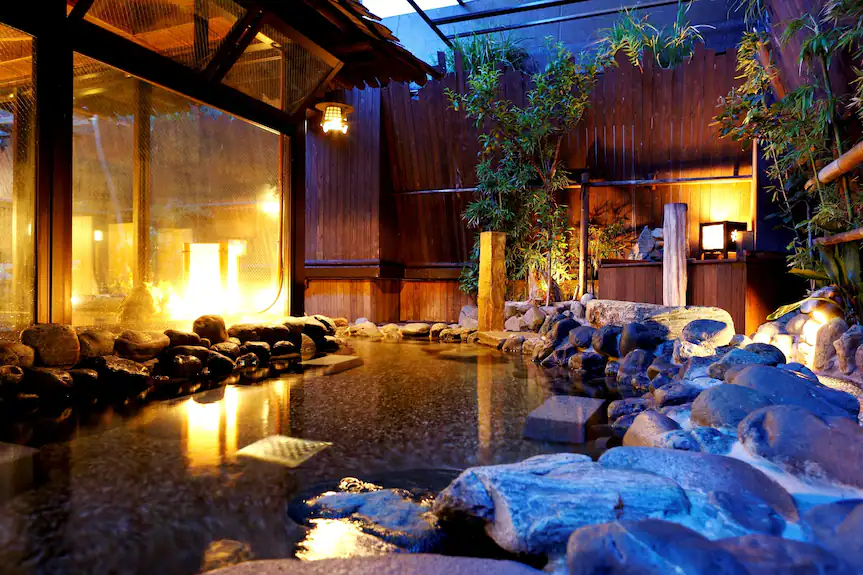
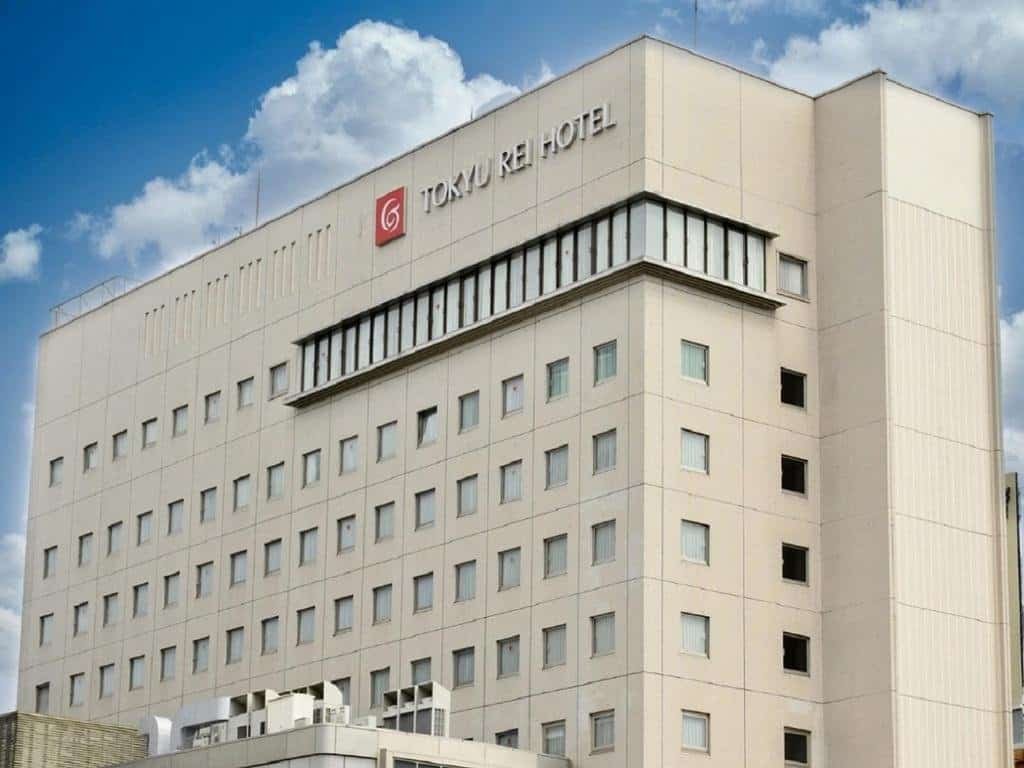
For the most part, near Nagano Station in Nagano City will be the best base as it has several transport options, including tour departures and direct shinkansen access between other major cities as you continue your travels.
Nagano City
Nagano City

Nagano City
For something extra special, the area near the Jigokudani Valley is famous for hot springs with towns like Shibu Onsen or Yudanaka Onsen full of ryokans and unique stays.
Yamanouchi
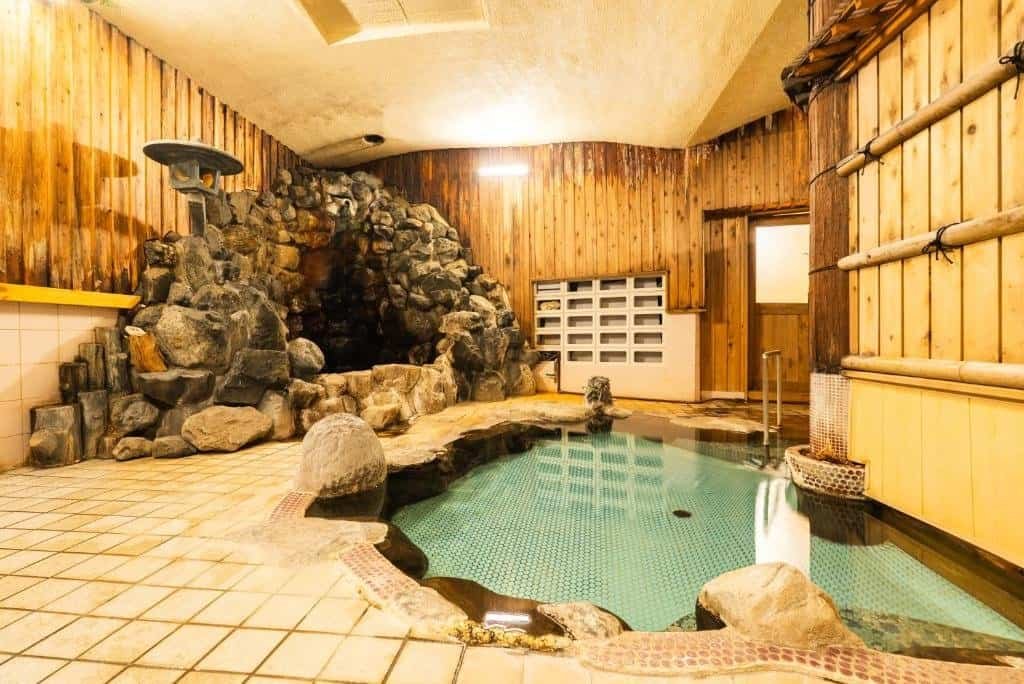
Yamouchi
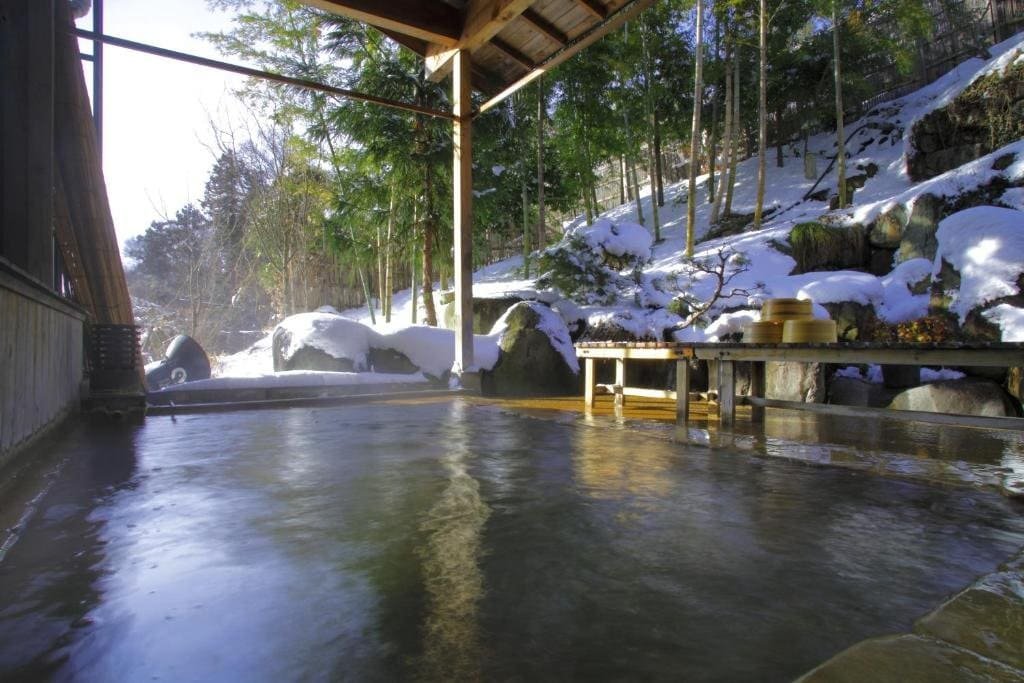
Yamamouchi

Common questions about the Snow Monkey Park
Here are the quick answers to the most common questions about visiting Jigokudani Snow Monkey Park, so you know exactly what to expect before you go.
What to pack for a day at Jigokudani Snow Monkey Park
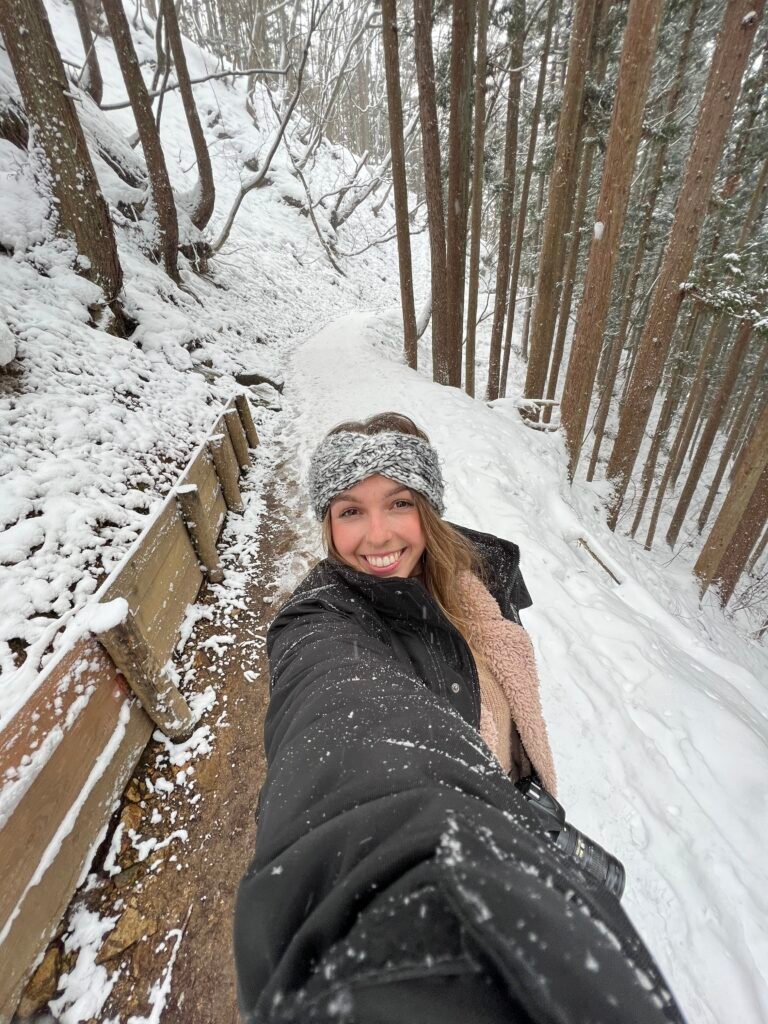
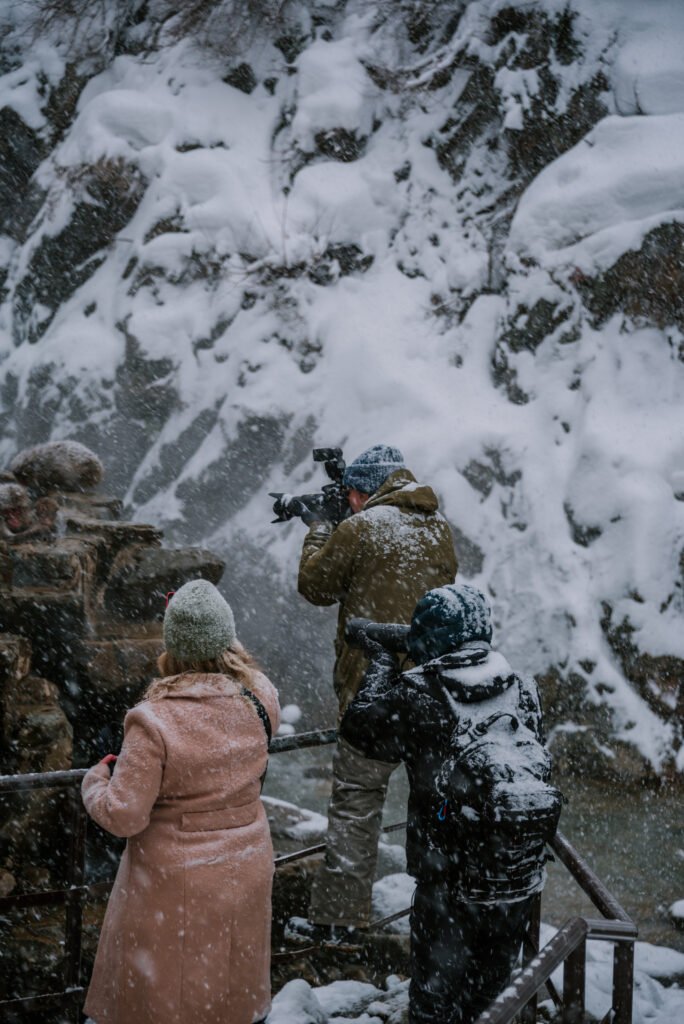
- Regardless of what season you visit it, comfortable walking shoes are essential. For the cooler months, make sure they have lots of good grip.
- A camera (please tag @wanderingdonut in all of your snow monkey pics when you visit!!!)
- Extra cash for tickets, snacks and souvenirs
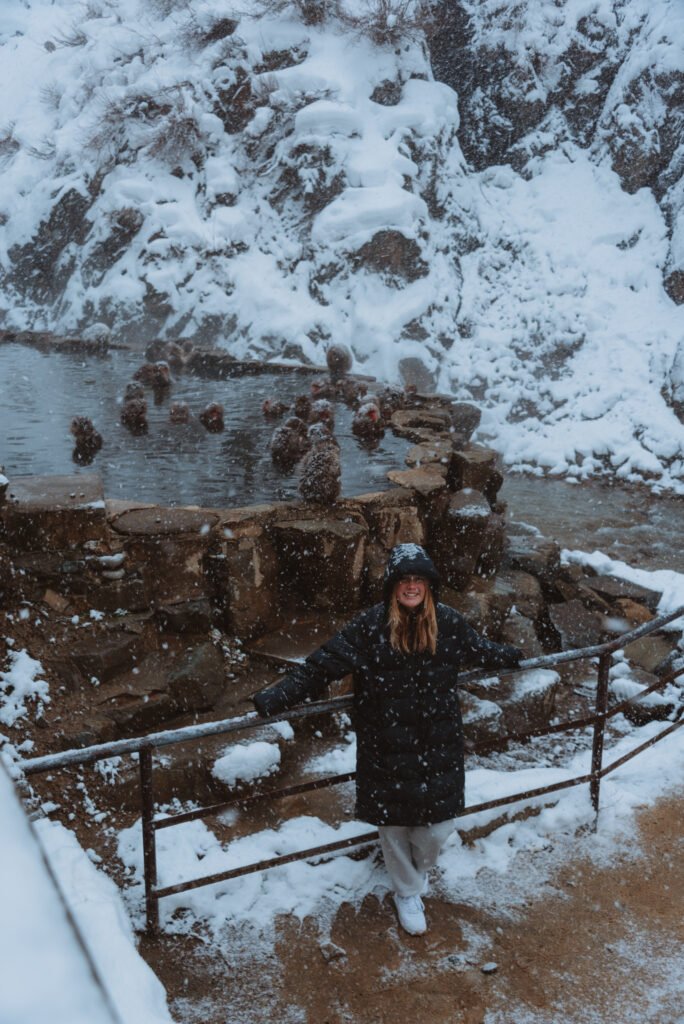
- A proper snow or waterproof jacket – as you can see, it can get pretty wild here!
How long do I need at the Snow Monkey Park?
Most visitors spend 1.5 to 2.5 hours at Jigokudani Snow Monkey Park, including the 30–40 minute forest walk each way.
If you are like me and enjoy photography or maybe you’re a huge monkey nerd, you may want to allocate a half or full day here. It allows you to be more flexible around the rushes of tourist traffic too.
Do the snow monkeys really bathe in the hot springs?

If the flood of photos hasn’t given it away so far, yes, the monkeys really do soak in the hot springs. However, they won’t always be in there or even nearby as they freely roam the entire valley.
They aren’t forced in their first entertainment reasons; it is simply because they are escaping the bitterly cold conditions in the valley.
Do humans also soak in the onsen?
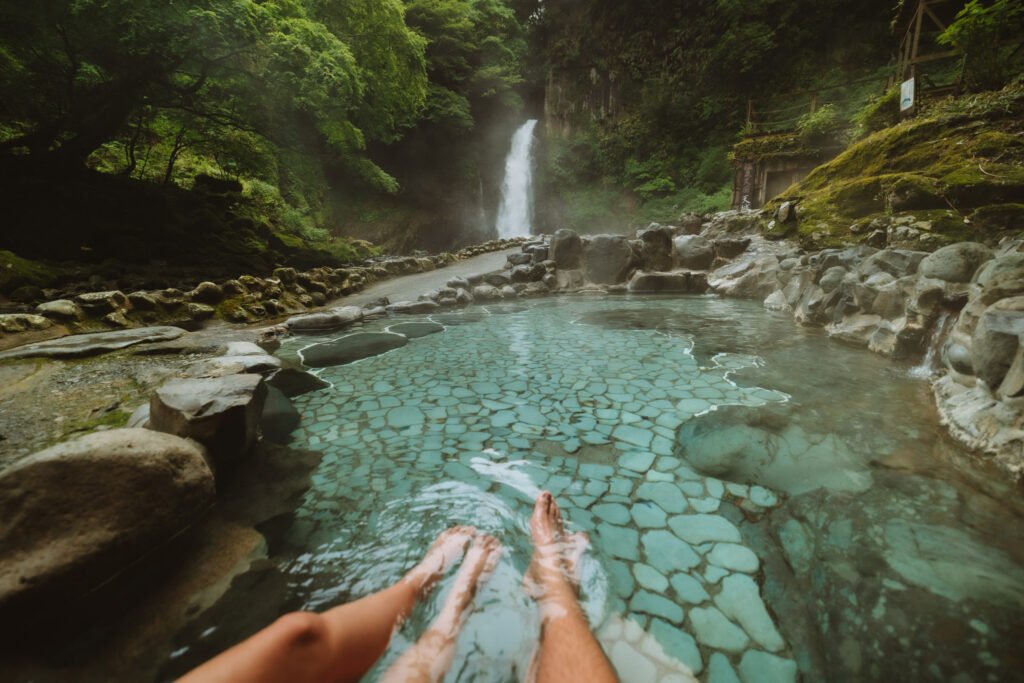
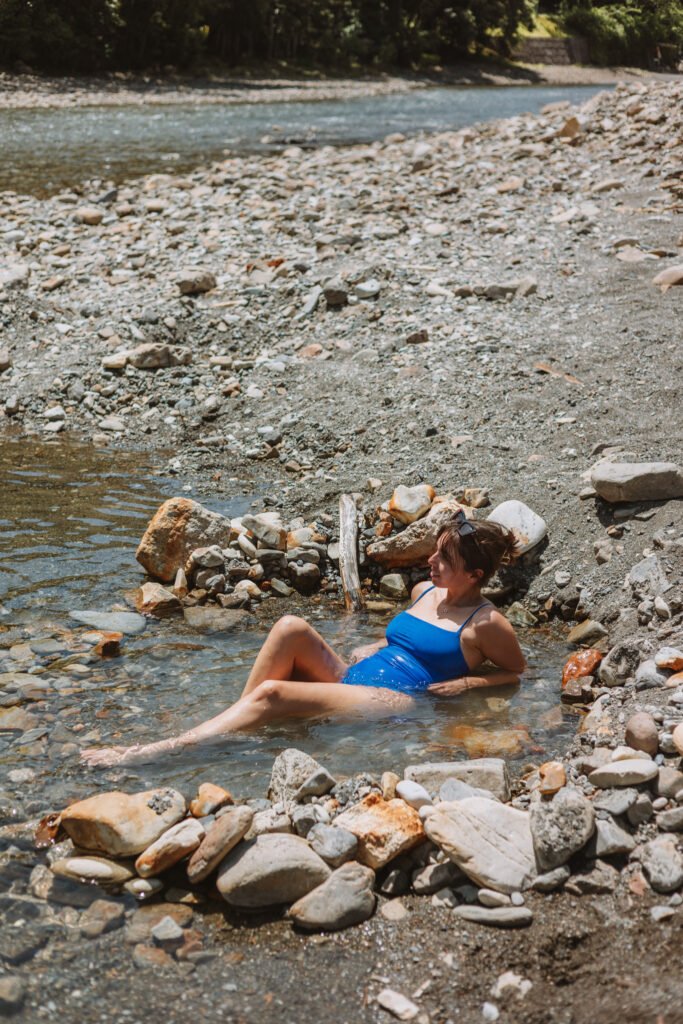

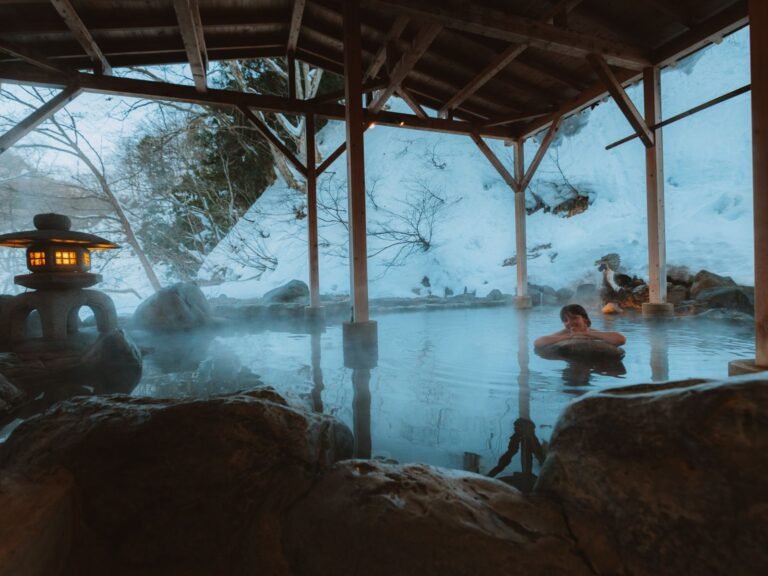
No, you do not bathe in snow monkey onsen. Even if you stay at the ryokan nearby, you have completely separate outdoor baths further down the river.
If you are looking for an alternate unique onsen soaking experience, I recommend:
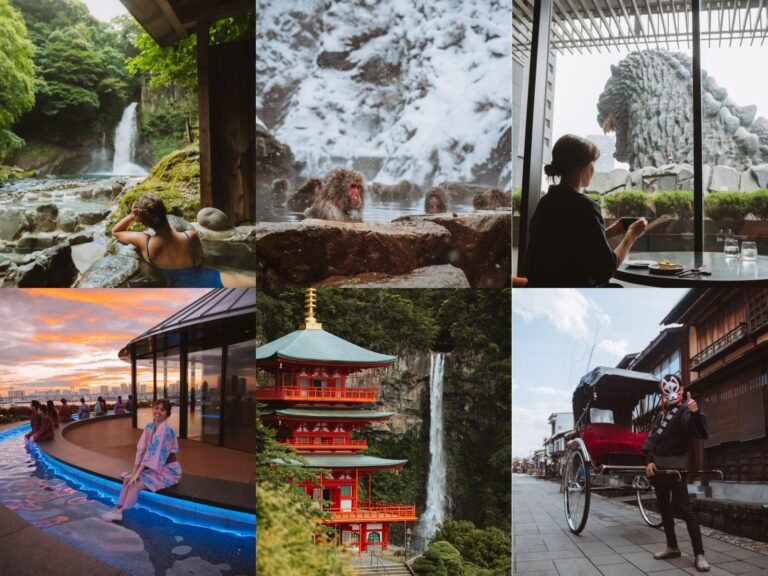
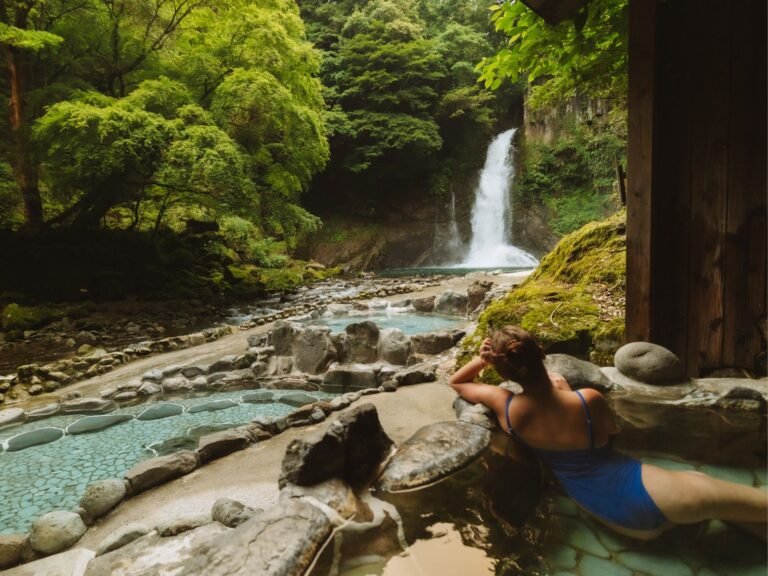
– Odaru Onsen, Izu Peninsula: The viral waterfall onsen
– Kawayu River Onsen (Seninburo): Dig your own onsen in a hot spring river in Wakayama.
– Toyosu Manyo Club Tokyo: 24hr, 9 storey onsen with 360 rooftop footspa
Are the monkeys dangerous? Do they bite? How close can you get?
These are WILD monkeys but habituated to humans, and serious incidents are rare. Probably just like you or I, they would only attack if provoked. Keep a respectful distance, avoid eye contact, never touch or feed them, and follow park rules at all times.
There are no fences between you and the monkeys, but if you stay still and let them move around you, they often come surprisingly close on their own.
Is Jigokudani Monkey Park ethical?
Yes, Jigokudani Snow Monkey Park is generally considered ethical because the monkeys are not bred for entertainment, the habitat is protected, and strict rules minimise human impact.
Some key notes:
- Minimal feeding done by park staff was historically done in winter to prevent starvation yet now the monkeys largely forage naturally, and visitors are strictly prohibited from feeding them.
- Again, this is not a ZOO. They are not forced into the hot srpings, these monkeys are completely wild.
- Jigokudani is also a scientific study site, where researchers observe macaque behavior, social structures, and winter adaptations.
Is the walk difficult? (Accessibility note)
The walk to Jigokudani Snow Monkey Park is about 30–40 minutes each way on a wide but uneven forest trail with some gentle inclines and as noted, the paths inside the park can be even wilder.
It’s manageable for most people with basic fitness, but not wheelchair accessible and not suitable for strollers, especially in winter.
Klook.comKeep Planning Your JapAdventures:
Unique 2 Weeks in Japan Itinerary: My 14 Day Beyond the Golden Route Itinerary
My Ultimate Japan Guide: 33 Unique Things To Do in Japan
Discover Japan’s Best Onsens: 18 Unique Onsen Hotels in Japan
Looking for tattoo-friendly onsen: Tattoo-friendly Onsen Hotels in Japan I would stay again + 3 I wouldn’t
Where to find the unique waterfall onsen: The Complete Guide to Amagiso Odaru Onsen
Avoid the crowds at Mt Fuji: 5 Unique Mt Fuji Photo Spots
Japan’s most underrated region: The Complete Guide to Aizu, Fukushima
Is Tokyo Disneyland Worth Visiting: Your Tokyo Disney Survival Guide
What about Universal Studios Japan: My Brutally Honest Guide to USJ
Is Jigokudani Snow Monkey Park Worth Visiting? My brutally honest opinion.

I can not lie, this is one of the BEST travel experiences I have ever had in my life that I simply never shut up about. Seriously, I already have my return planned so expect big updates to this soon!
In saying that, I wouldn’t necessarily recommend to everyone. There way not be many reasons for that but they are dealbreaking reasons you need to think about:
- ACCESSIBILITY LIMITATIONS: You can not ignore that this path, especially during winter, is not safe or feasible for a lot of people. Again, it is simply not wheelchair or pram accessible.
- SEASON DEPENDANT: If you asked me “Hey, is Jigodukani Snow Monkey Park worth visiting” but your trip is in the middle of Japan summer, I would say no. Because let’s be real, its the monkeys that you would go here for and there is such a slim chance of spottings in the Summer.
If you wanted the best summer scenic walk in Nagano I would actually recommend Togakushi Shrine or Kamikōchi!
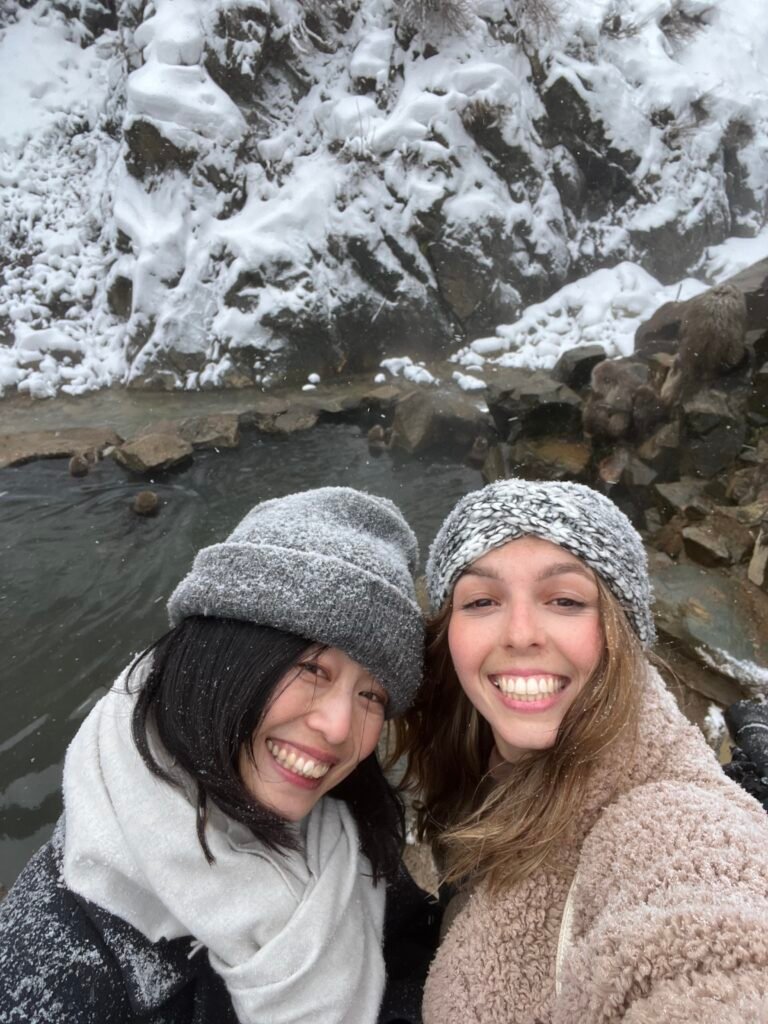

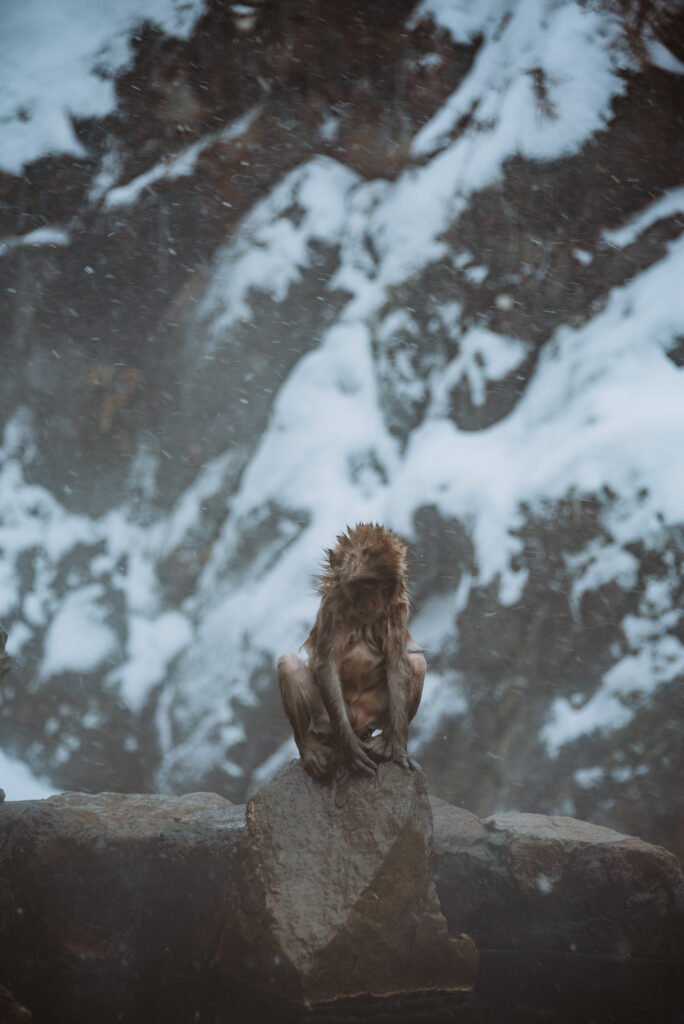
Ultimately, if you live for the spontaneous travel moments, Jigokudani Snow Monkey Park is absolutely worth it. And that is coming from someone usually terrified of monkeys!
Be intentional with your timing then take it while you are there, dress properly (a message I wish I could go back and tell myself haha), and go in with an open mind… and even more open eyes for monkey spotting.
As always, if you ever have any questions or are feeling extra nosy and want more in-depth insight, do not hesitate to email me or DM @wanderingdonut ♡
BONUS Discounts


My Go-To Travel Resources